Friday, 8 December 2023

Assignment 201 - Indian English Literature - Pre Independence

 Name : Anjali M. Rathod


Enrollment no. : 4069206420220024


Roll no. : 02


Batch : M.A. Sem. 3 (2022-24)


Paper no. : 201 - Indian English Literature - Pre Independence 


Email Address: rathodanjali20022002ui@gmail.com


Submitted to : Smt. S.B. Gardi, Department of English, Maharaja Krishnakumarsinhji Bhavnagar University, Bhavnagar - 364002


Narrative Technique of the Novel - The Home and The World 


Introduction of the Author:
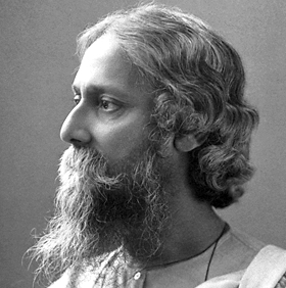


Rabindranath Tagore was born in Calcutta, India, on May 7, 1861, to Debendranath Tagore, a notable philosopher. Despite disliking traditional schooling, Tagore, educated by tutors, wrote extensively during his childhood. He briefly studied law and English literature in England in 1877 but returned to India due to dissatisfaction with Western education.


Tagore, a versatile artist, wrote poetry, novels, plays, and more. His famous work, "Gitanjali: Song Offerings" (1912), earned him the Nobel Prize in Literature in 1913, making him the first non-European and lyricist to win. He often wrote in Bengali first, translating his works to English. Notable Bengali publications include "Sonar Tari" (1894) and "Manasi" (1890).


Tagore pioneered the Bengali short story and published in both Bengali and English. Notable collections include "The Hungry Stones and Other Stories" (1916) and "The Glimpses of Bengal Life" (1913). His short stories drew inspiration from his years managing family estates in Shilaidah and Shazadpur, reflecting his compassion and belief in universal education.


Living on a houseboat on the Padma River during the 1890s, Tagore's interactions with villagers influenced his work and activism. His writings conveyed his views on Indian independence, the caste system, education, and other socio political issues.


Introduction of the Novel : 
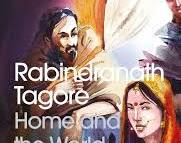
  ‘The Home and The World is set against the backdrop of the Swadeshi Movement, a pivotal period in India's fight against British colonial rule. The novel unfolds in the early 20th century, primarily in the estate of the aristocratic landlord Nikhil, his wife Bimala, and Sandip, a charismatic and nationalistic friend.


         As the Swadeshi Movement gains momentum, the characters find themselves entangled in a web of conflicting ideologies, personal desires, and societal expectations.


    The narrative primarily revolves around Bimala, whose experiences and emotions serve as a lens through which the reader explores the broader socio-political landscape. The novel employs a multi-layered narrative structure, shifting perspectives among the three central characters of Nikhil, Bimala, and Sandip. Tagore's narrative technique involves a skillful interplay of first-person narratives, letters, and introspective passages, allowing readers to witness the story from multiple angles.


         The story begins with Bimala describing her relationship with Nikhil. She practically worships Nikhil, but she despises her sister-in-law, who often teases and insults her. Nikhil turns a blind eye to his sister’s treatment of Bimala. Rather, Nikhil wishes Bimala would see herself and him as equals and leave the home together occasionally. 

          Nikhil is loosely involved in the Swadeshi movement, often funding various projects to help the local economy. In addition, he funds Sandip Babu, an Indian nationalist speaker whom Bimala suspects of taking advantage of her husband.


            Bimala and Nikhil see Sandip speak, and she is deeply moved by his charisma. Sandip stays with Bimala and Nikhil, and during dinner, he and Nikhil argue about the extent to which nationalism will help India. Bimala, in an unusual display of autonomy, sides with Sandip and disagrees with her husband, believing that movements must sometimes be informed by passions rather than temperance. 


       Sandip compliments Bimala throughout the night and believes that she is the embodiment of India. After another argument with a similar outcome, Nikhil feels that he is becoming inadequate for his wife. Nikhil’s former school master and friend, Chandranath, arrives and encourages Nikhil to send Sandip away, but Sandip decides that Nikhil’s estate is the perfect place to do his business. Furthermore, he wants Bimala to be his Shakti, a woman to represent the Indian people.


Narrative Technique in the Home and the World : 


   The Home and the World comprises twelve chapters. Some chapters contain more than one self-narration. The total number of such narratives is twenty-three. Bimala is found to speak on ten occasions, while Nikhil and Sandip speak eight times and five times respectively. Of course, the opening and concluding narratives come from Bimala. Although set against the momentous freedom movement in India in 1905.


             The Home and the World is a psychology oriented novel. The basic advantage of the first person narrative is well exploited by the novelist in this respect. Each narrative well reveals the nature of the speaker concerned as also her or his attitude or angle of vision. The  events and situations, constituting the action or theme of the novel, are related in such narratives, but the most engrossing element of human psychology is well brought out particularly in these. It is not immaterial to mention here that in each first person narrative, the thematic situation is found less woven, while the speaker's mood of mind and personality are more expanded. 


      In fact, out of the thin texture of fictional setting and story, this has made a deep probe into the inner world and lightened the dark corridor of the individual mind. This has brought The Home and the World close not merely to the psychological but also to the stream of consciousness technique in novel writing.


 The novel employs various storytelling techniques, including the epic, epistolary, autobiographical, and first-person narrative. The first person narrative involves different characters sharing their experiences, feelings, and perspectives in their own words. Unlike autobiographical novels where a single speaker recounts the story, the first person narrative features multiple characters speaking.  In  the first person, offering diverse viewpoints on the same events. While this approach may lead to some repetition, it adds depth by exploring varied psychological aspects of the narrative. 


     Rabindranath Tagore's ‘ The Home and the World’ exemplifies this technique, as the story unfolds through the individual self-narrations of its three main characters Bimala, Nikhil, and Sandip each providing a unique angle of vision. 


     The speaker is single, mostly the novelist, who is also the hero of the story. He is the sole observer, scrutiniser and story-teller, and everything is viewed and presented from his particular view-point. He also speaks in the first person, but he is the only person to speak. But, in the first person narrative, the speaker is not one. Different characters speak, no doubt in the first person, but with difference in approach and assessment. 


     This is autobiographical revelations, quite unlike what is in the autobiographical novel, vary and show the varied aspects of the same matter. Of course, repetitions are not unlikely in, rather natural to, such a first person narrative. Bimala's opening story, no doubt, sets the entire background of her life, her conjugal happiness with Nikhil. Psychological twist is not much here and she speaks out as a simple happy wife of a highly aristocratic and wealthy family. This also bears out her great regard for her husband and fidelity to the rigidity of the family of her father in law.


Conclusion : 


   To sum up, the narrative technique of Tagor’s Novel goes beyond storytelling, creating a compelling exploration of identity, love, and nationalism. Through a blend of first-person narratives, letters, symbolism, and folk elements, Tagore's novel transcends its historical setting, offering timeless insights into the human condition. The transformative power of narrative technique is evident as readers navigate intricate relationships and ideologies, making the novel a profound examination of universal themes that transcend time and borders. 


      ‘The Home and The World’ stands as a testament to Tagore's literary prowess, using narrative technique to explore the profound depths of the human experience.


   Thank You… .   


Images : 2

words : 1258  


Youth Festival 2023


   Youth Festival 2023


     This blog is in response to the Sunday Reading. In this blog I am going to discuss the Youth Festival 2023 at Maharaja Krishnakumarsinhji Bhavnagar University and also so many themes which are represented in events.


             In This year's Youth Festival was organized by the Department of Physical Education. Maharaja Krishnakumarsinhji Bhavnagar University organized a Youth Festival for many years. This is the 31st Youth Festival with the theme of 'Nari Vandana' and full title with 'Man Bhavan Yuva Mahotsav'.


     Themes :  Kalayatra, Essay competition, on the spot painting competition, Elocution Competition, photography competition, clay modelling competition, paper collage competition, poetry writing competition, cartooning competition, poster making competition and Installation Competition, etc. The central theme of this festival was "Nari Shakti Vandana," and the event was hosted by the Physical Education Department of the University.


     Kalayatra initiated the first Youth Festival event on the evening of November 2, 2023. The procession started at Shamaldas Arts College, moved through Central Salt, and concluded at J.K. Sarvaiya Group of Colleges in Sardarnagar. The main goal of Kalayatra was to offer students a stage to display their artistic skills and present inventive concepts. Students from different colleges and departments showcased their creativity through various costumes and posters. Furthermore, the event was broadcasted live on a YouTube channel, enabling a broader audience to experience Kalayatra and other happenings.


      Here is the link of Kalayatra: 


                           https://youtu.be/0g9fpaD6SGs?si=D_rT5yW-4I110H3G                    


                                                    Various Events of the Youth Festival - 

                                                         3rd November, 2023 - Day - 1 


 1. Mimicry


      Mimicry, the first event of the Youth Festival, unfolded as a captivating showcase of talent and creativity. Participants use their own voices to imitate various sounds such as scooter, helicopter, train, Auto - Rikshaw, sounds of different animals. Participants worked very hard to make their performance good and satisfactory.  


Last year there were only four Participants in the Mimicry. But, this time it was good to see that 7 or 8 Participants were there.


2. Skit :-   Organized in the Atal Auditorium


    Skit covered many important topics which threw some light upon the current scenario of India. Skit is a kind of event for the purpose of entertainment and reflects everyday Situations that brings people together through shared laughter and amusement.


 The theme "Women: From Oppression to Freedom"


The theme "Women: From Oppression to Freedom" unfolds the transformative journey of women as they navigate from traditional roles to modern empowerment. It explores stories ranging from persistent child marriage in Balikavadhu to the challenges faced by working women, mothers, and wives. The portrayal extends to widows grappling with a colorless existence and societal suppression.

However, the narrative takes a triumphant turn as women emerge from oppressive circumstances, challenging societal norms to excel in various fields such as business, law, engineering, cricket, the navy, dance, medicine, and journalism. 

    These empowered women not only break free from traditional shackles but actively contribute to uplifting those suppressed by societal norms, marking a profound shift from oppression to freedom.


3 Bhajan : 

4: On the spot painting

5: Prashna manch ( organized in department of English )

6 Folk Dance 

7 Sugam Geet 

8 Swarachit Kavya Pathan 

9 Paper Collage


                                       4th November 2023

                                        2nd day of Youth Festival

1 Samuh geet

2 Ekanki

3Shashtriya Gayan

4Tatkal Photography

5 Clay Modelling 

5 Elocution competition 

6 Quiz competition

7 Classical Dance

8 Cartooning 

9 poster Making 

10 Essay Competition

11 Mono Acting


                                               5th November 

                                    Third day of youth Festival


1 Instalation 


2 Samuh Geet

3 Mime

    The Mime event, held in the Atal Auditorium as part of the Youth Festival, is a captivating display of silent storytelling. Young performers, dressed in white, use gestures and movements to vividly portray scenes, conveying emotions and narratives without speaking. This event showcases not only the performers' mastery of body language and facial expressions but also serves as a potent platform for social commentary and reflection. As the silent stories unfold on stage, the audience is immersed in a world of creativity and symbolism, making the Mime event a poignant and thought-provoking highlight of the Youth Festival. It encourages an appreciation for the nuances of communication and the impactful nature of theatrical expression.


Winning Moments : 


          Many many Congratulations to Trushali Dodiya for winning second Position in Rangoli competition and Dhatri Parmar for winning second position in Cartooning. It was truly a proud and great moment for all of us.


 Happy Learning to ALL… . 


 Thank You For Visiting … . 


Sunday, 22 October 2023

J. M. Coetzee's 'Foe'


   J M Coetzee's Foe

                       Thinking Activity


  • Comparative and critical analysis of Daniel Defoe’s ‘Robinson Crusoe’ and J. M. Coetzee’s ‘Foe’


In comparative and critical studies first we introduce both Daniel Defoe’s ‘Robinson Crusoe’ and J. M. Coetzee’s ‘Foe’. 


This Blogspot is in response to the thinking activity on J. M. Coetzee’s Foe . This thinking activity task is assigned by Megha Ma'am. I am going to write down a BlogSpot on J. M. Coetzee’s ‘Foe’. 


  •  Daniel Defoe’s ‘Robinson Crusoe’


             Daniel Defoe, born in 1660 in London, England, was a versatile writer, journalist, and pamphleteer whose works made a significant impact on English literature. Defoe's literary legacy is particularly notable for his pioneering role in the development of the novel as a distinct literary form. His most famous work, "Robinson Crusoe," published in 1719, stands as a seminal piece of adventure fiction and has left an indelible mark on the literary world.


         ‘Robinson Crusoe’ by Daniel Defoe and first published in 1719, stands as a timeless masterpiece in the realm of adventure literature. This enduring classic chronicles the extraordinary journey of a mariner shipwrecked on a deserted island and his remarkable survival against all odds. Through the character of Robinson Crusoe, Defoe weaves a compelling narrative that explores themes of isolation, resilience, self-discovery, and the triumph of the human spirit. Robinson Crusoe has had a profound influence on literature and popular culture. It is considered one of the earliest novels in the English language, setting a precedent for the adventure genre. The novel has inspired countless adaptations, including films, television series, and stage plays. Moreover, it has influenced other literary works, sparking discussions on survival, human nature, and the essence of civilization.


        Daniel Defoe's Robinson Crusoe  continues to captivate readers worldwide, offering a compelling exploration of the human spirit's resilience in the face of adversity. Through Crusoe's extraordinary journey, Defoe delivers timeless lessons on survival, self-reliance, and the enduring power of hope. As readers navigate the pages of this iconic tale, they are reminded of the indomitable strength that resides within every individual, echoing Crusoe's enduring message of determination and survival against all odds.


  • J. M. Coetzee’s ‘Foe’


           J.M. Coetzee born on February 9, 1940, in Cape Town, South Africa, is a literary titan whose works have left an indelible mark on the world of literature. His insightful exploration of themes like apartheid, colonialism, power, and morality has earned him numerous awards and a reputation as one of the most significant writers of contemporary fiction.

Coetzee grew up in a bilingual and academic household, displaying early signs of his future literary prowess. He pursued his education at the University of Cape Town and later obtained a Ph.D. in English from the University of Texas at Austin. His academic background profoundly influenced his writing style and intellectual depth.


J.M. Coetzee's novel Foe was published in 1986. It stands as a provocative and inventive reimagining of Daniel Defoe's classic work, ‘Robinson Crusoe’.  Coetzee's narrative takes the story into unexplored territories, challenging traditional literary norms and questioning the nature of storytelling itself.


‘Foe’ introduces us to Susan Barton. She is  a woman marooned on a desolate island. Stranded and desperate to return home, she encounters Cruso, a mute man, and Friday, a native man. The story, thus, mirrors the familiar elements of Defoe's original narrative. However, Coetzee's novel takes a sharp turn by introducing a new character: Foe, a writer.


Susan was eager to tell her story and find a way back home  seeking Foe's assistance. Foe takes charge of narrating Susan's experiences, reshaping them into a marketable story for public consumption. Throughout the novel, the characters grapple with issues of authorship, power, and the inherent colonial nature of storytelling.


One of the most significant departures from Defoe's tale is the character of Friday. In ‘Foe’ Friday is portrayed as a man capable of speech but chooses not to communicate. This deliberate silence becomes a powerful symbol, highlighting the suppression of indigenous voices during the colonial era.


  •  Comparative and critical analysis of both Novel


            When  comparing both Novels ‘Robinson Crusoe’  and ‘Foe’.  It becomes evident that while Defoe’s work celebrates individual resilience in the face of isolation, Coetzee’s novel delves into the complexities of human relationships, power structures, and the ethical dilemmas of storytelling.


          ‘Foe’ challenges the reader to critically examine historical narratives, offering a fresh perspective on the familiar tale, making it a compelling and essential read for those interested in the nuances of postcolonial literature. Coetzee uses Susan's self-awareness and reflective writing style to depict this position. This self-reflection allows Coetzee to write from a neutral perspective, neither fully active nor passive, symbolizing his own ambiguous identity as a white male writer in South Africa. 


           Susan rejected the authority associated with his white male identity due to its connection with the abuse of power. He identifies with Susan's lack of authority as an unsuccessful author, aligning himself with her vulnerability. Through Susan's voice, Coetzee criticizes colonialist and humanist discourse, exposing its flaws and acknowledging his own complicity in it.


           ‘Robinson Crusoe’ by Daniel Defoe and ‘Foe by J.M. Coetzee, while both rooted in the theme of survival on a deserted island, offer vastly different perspectives on human experience. In this comparative analysis, we will delve into the intricate layers of these novels, exploring the similarities and disparities in their portrayal of isolation, power dynamics, and the complexities of human relationships.


         ‘Robinson Crusoe’ was about a guy named Robinson Crusoe who gets stuck on an island. He learns to survive by himself, which shows human resilience. In ‘Foe’ a woman named Susan is stranded on an island too. It focuses on the emotional challenges of being alone and how it affects her. ‘Robinson Crusoe’ , Crusoe is the boss of the island. He makes decisions, controls everything, and showcases the power of one person in a challenging situation. 


         In ‘Foe’  who has the power to tell a story. It explores how different voices are suppressed, challenging the idea of who gets to control narratives. Friday has a voice but chooses not to speak. This silence highlights the historical silencing of indigenous voices during colonization, adding depth to the story. ‘Foe’ questions the ethics of storytelling. It’s like a story within a story, where characters debate who gets to shape the narrative. It challenges the truthfulness of historical storytelling.


            In ‘Robinson Crusoe’ Crusoe forms a bond with Friday, a native he meets on the island. Their relationship represents understanding and cooperation between different cultures. 


Conclusion

‘Robinson Crusoe’ and ‘Foe’ both explore survival, power, and relationships, but ‘Foe’ adds layers by questioning the ethics of storytelling. While ‘Robinson Crusoe’ focuses on individual strength, ‘Foe’ dives into the complexities of power dynamics and the stories we choose to tell. Both books teach us valuable lessons about human nature and the intricacies of communication and control.


Words : 1141


Wednesday, 30 August 2023

Movie review : Rakshabandhan

 Raksha-bandhan


#dowry 

#mental_herresment 

#stop 

#fight 

#lession

#raksha_bandhan 


I watched the film "#Raksha Bandhan." I know very well that it was also released one year ago in the year of 2022. But I want to give a review on the auspicious occasion of Rakhi Celebration. 


It carries a profound message and is highly significant. I recommend that everyone should watch this movie along with their Family.


कहानी… 


हम ज्यादातर मूवी मनोरंजन के लिए देखते है पर ये फिल्म बोहोत दिलचस्प है मनोरंजन के साथ  समाज में होने वाली समस्याओं के बारे में सोचने पर विचार करने की प्रेरणा देती है। यह कहानी है चांदनी चौक में रहने वाला लाला केदारनाथ याने की अक्षय कुमार जो चाट की दुकान चलाते हैं । केदारनाथ की चार बहन हैं। ये कहानी में महत्वपूर्ण बात ये है की रिस्तो की महत्त्वपूर्णता , भाई- बहन का प्यार और सहायता दिखाती है। लाला केदारनाथ को चिंता है उनकी बहनों की शादी की और शादी में देने वाले दहेज की। इन शादियों के लिए केदारनाथ क्या-क्या करता है। इसी कहानी को आनंद राय ने बड़े सरल  तरीके से दिखाया है. कहानी इतनी सरल है कि आपको लगेगा ये तो बहुत बार सुनी है लेकिन इसे जिस तरह से कहा गया है वो दिल को छू लेता है और आंखों में आंसू छोड़ जाता है।


On the day of Raksha Bandhan, his sister committed suicide because her In-laws wanted the refrigerator as a gift and they threaten her to either tell for the fridge or don’t go to her brother’s home. She choose to end her life to commit suicide because his brother almost gave her in-laws 18,000,00  as a dowry. At the end of the movie, we can see that another three sisters get married without dowry and she also achieves good posts for their earnings. Even attains good job positions for financial independence.


It is a naked or harsh reality of our society on the gift we are giving as a dowry. 


  • किसी ने सच ही कहा है 


            औरतें बिकी तो वो तवायफ हुई,

            और मर्द बीके तो दूल्हे।


Hi Papa : Movie Review

      Hi Nanna - Movie Review  जान से भी में तुझको हूं प्यारी... कहता फिरता है की में हूं प्यारी... में हुं आँखें तेर...