Friday, 2 February 2024

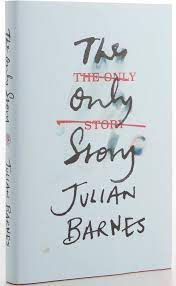
The Only Story by Julian Barnes

 The Only Story 

            by 

              Julian Barnes


 “Would you rather love the more, and suffer the more; or love the less, and suffer the less? That is, I think, finally, the only real question.”


Hello Readers! This blog is a part of Thinking Activity. It was assigned by Dr Dilip Barad sir(HoD), Department of English, MKBU. In this blog I am going to write about Worksheet 3 which was in the blog linked here (click here) , For for Symbolism in Crossword Puzzle.

                                             Julian Barnes


Julian Barnes is the author of several books of stories, essays, a translation of Alphonse Daudet's In the Land of Pain, and numerous novels, including the 2011 Man Booker Prize winning novel The Sense of an Ending and the stunning The Only Story. Other publications include Keeping an Eye Open: Essays on Art and The Man in the Red Coat.


Booklist calls Barnes's most recent novel Elizabeth Finch, "A lyrical, thoughtful, and intriguing exploration of love, grief, and the collective myths of history. Barnes adds yet another remarkable title to his astoundingly remarkable body of work."


Barnes has received numerous awards and honours for his writing, most recently the David Cohen Prize for Literature in 2011, the 2011 Man Booker Prize, the 2021 Jerusalem Prize, and the 2021 Yasnaya Polyana Literary Award. Also in 2021, he was awarded the Jean Bernard Prize, so named in memory of the great specialist in hematology who was a member of the French Academy and chaired the Academy of Medicine.Click here to know more

                                               The Only Story  
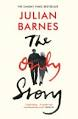


Julian Barnes’s slim, grim new novel, “The Only Story,” will remind fans of “A Sense of an Ending,” which won the Booker Prize in 2011. Like that elegiac novel, his new book concerns an older man who looks back with a pained sense of culpability at a relationship in his youth. Perhaps for some authors of a certain age — Barnes is now 72 — doleful nostalgia becomes the only story. Click here to know more


Barnes deftly explores time and memory in his latest novel, about an older man recalling the romance that defined his life. Like his Man Booker winning 2011 novel The Sense of an Ending, and indeed his 2008 memoir Nothing to Be Frightened Of, Julian Barnes’s latest novel is narrated by an older man puzzling over the meaning of existence. All three speakers share a 1950s childhood in the “Metroland” of Barnes’s debut novel, and a promising, if anxious, academic 60s youth that took them away from their suburban families. Each also has a similarly melancholy, intimate tone, a fine line in rhythmic, elegant, understated prose, and plenty to say about time, love and the slippery nature of memory. (Clanchy)

    Worksheet 3: 
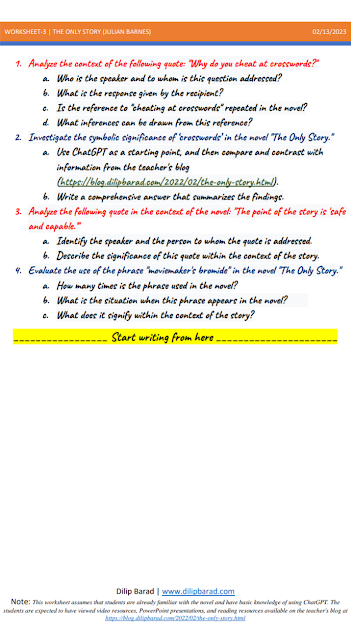
                           

1. Analyze the context of the following quote: "Why do you cheat at crosswords?"

A. Who is the speaker and to whom is this question addressed?

   Paul is asking this question to Joan, Paul is the Speaker.


B. What is the response given by the recipient?

Joan responded , you mischievous person. I assume Susan spilled the beans to you. You see, and I hope you never experience this yourself, but some of us reach a point in life where we realize that nothing holds significance. Absolutely nothing. And one of the few perks of reaching that stage is knowing that you won't be condemned for filling in the wrong answers in a crossword puzzle. 


C. Is the reference to "cheating at crosswords" repeated in the novel?

Yes, this novel shows two different ideas about "cheating" in crosswords. Paul thinks it's wrong, but Joan has her own reasons for doing it and doesn't see it as bad. This keeps coming up, showing how people can have different ideas about what's right and wrong.

d. What inferences can be drawn from this reference?

Joan "cheats" in crosswords because she thinks life is messy and doesn't have a clear plan. By cheating, she's kind of saying "screw the rules" to the idea that everything in life needs to be figured out. It's her way of dealing with the chaos and problems in life. It's like a personal game where she makes her own rules, which helps her feel better.


2. Investigate the symbolic significance of ‘crosswords’ in the novel "The Only Story." 

A. Use ChatGPT as a starting point, and then compare and contrast with  information from the teacher's blog. https://blog.dilipbarad.com/2022/02/the-only-story.html 


  • Order and Meaning: Crosswords represent the human desire to impose order and meaning on a chaotic world. The grid structure and defined rules offer a sense of control and certainty.

Characters like Paul find solace in solving crosswords, seeking answers and connections within the puzzle's framework.

  • Illusion of Control and Meaning: However, Joan's "cheating" challenges this notion. She disregards the rules, highlighting the limitations of order and suggesting that meaning may not be readily available.

Crosswords then become a symbol of the futility of seeking absolute truth and certainty. Life might be inherently messy and lack clear answers.

  • Coping Mechanism and Escape: For Joan, "cheating" becomes a coping mechanism. It allows her to detach from the pressure of finding meaning and embrace the absurdity of life.

Crosswords offer a temporary escape from the burdens of her past and the uncertainties of the present.

  • Individual interpretations: The "cheating" itself represents the subjective nature of truth and meaning. Paul and Joan have different interpretations of what constitutes "cheating", reflecting their individual worldviews and coping mechanisms.

  • Contrasting Values: Crosswords become a microcosm of broader societal values. They represent traditional notions of logic, order, and intellectualism, often associated with Paul's generation.

Joan's challenge to these values reflects a shift towards postmodern perspectives that question absolutes and embrace ambiguity.


B. Write a comprehensive answer that summarizes the findings. 

The response from ChatGPT talks about how Joan sees crossword puzzles differently because of her experiences in life. She cheats on them as a way to deal with life's chaos and uncertainties. Meanwhile, the teacher's blog focuses more on the traditional idea of cheating in crossword puzzles and Joan's different perspective on it. Joan doesn't think it's cheating in the same way Paul might. Both perspectives help us understand the novel from different angles.


3. Analyze the following quote in the context of the novel: "The point of the story is 'safe  and capable.'" 


A. Identify the speaker and the person to whom the quote is addressed.

"The point of the story is 'safe and capable."  Susan is telling Paul and the Speaker is Susan and the Person is the paul.


B. Describe the significance of this quote within the context of the story. 

The essence of the story revolves around the theme of being "safe and capable." When Jack faced death, he entrusted Gordon to Susan because he believed she would look after him well. This trust was immense, to the extent that, despite Jack's deep affection for Paul Roberts, he couldn't entrust Gordon to him. Thus, the concept of being "safe and capable" is intricately linked to the trust Jack had in Susan.


4. Evaluate the use of the phrase "moviemaker's bromide" in the novel "The Only Story." 


A. How many times is the phrase used in the novel? 

The phrase "safe and capable" appears twice in the novel.

b. What is the situation when this phrase appears in the novel? 

In the novel, the phrase "safe and capable" is used twice in a situation where Paul is with Susan on her deathbed. He reflects on how a goodbye can seem overly dramatic, almost like something scripted by a movie maker's cliché.

c. What does it signify within the context of the story?

Within the novel, we witness Paul, now elderly, visiting Susan, his beloved, as she lies on her deathbed. Through Paul's reflections, Julian Barnes conveys the notion that if their situation were portrayed in a movie, it would echo the classic scene where the hero bids farewell to the heroine with a poignant kiss on the forehead, her passing marking the conclusion of the story with dramatic flourish. This sentiment is echoed in the original text: "I wondered if I should kiss her goodbye. Another moviemaker’s bromide... Then, with the tears unwiped from my cheeks, I would rise slowly and leave her." (Barnes) This portrayal challenges traditional notions of love, presenting the reality that love often concludes with poignant emotions, rejecting idealized romanticism. 


Narrative pattern of the Novel

The novel employs a non-linear narrative structure, jumping back and forth in time. It begins with the protagonist, Paul, reflecting on his past, particularly his relationship with Susan, a married woman much older than him. 


The story then moves back and forth between different periods of Paul's life, exploring the evolution of his relationship with Susan and its impact on him over the years.  Throughout the novel, Paul reflects deeply on his past and the choices he has made, particularly his decision to enter into a romantic relationship with Susan despite the societal norms and the disapproval of others. He examines his motivations, desires, and the consequences of his actions, offering readers insight into his psyche and emotional state.


Love is a central theme of the novel, explored through Paul and Susan's relationship and its various stages. The narrative delves into the complexities of romantic love, the intensity of emotions it evokes, and the challenges of sustaining it over time. Memory also plays a significant role, as Paul reminisces about his past with Susan and grapples with the ways in which memory can be subjective and unreliable.


References: 


  • Open AI. "Chat GPT-3.5"


Words : 1629 

Sunday, 28 January 2024

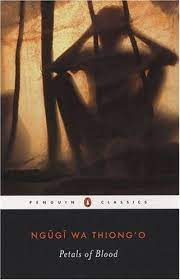
Petals of Blood by Ngugi Wa Thiong’o

 Petals of Blood 

              by 

         Ngugi Wa Thiong’o


Hello Readers! This blog is a part of Thinking Activity. It was assigned by Megha Ma'am, Department of English, MKBU. In this blog I am going to write about some of the ideas about Petals of Blood by Ngugi Wa Thiong’o.


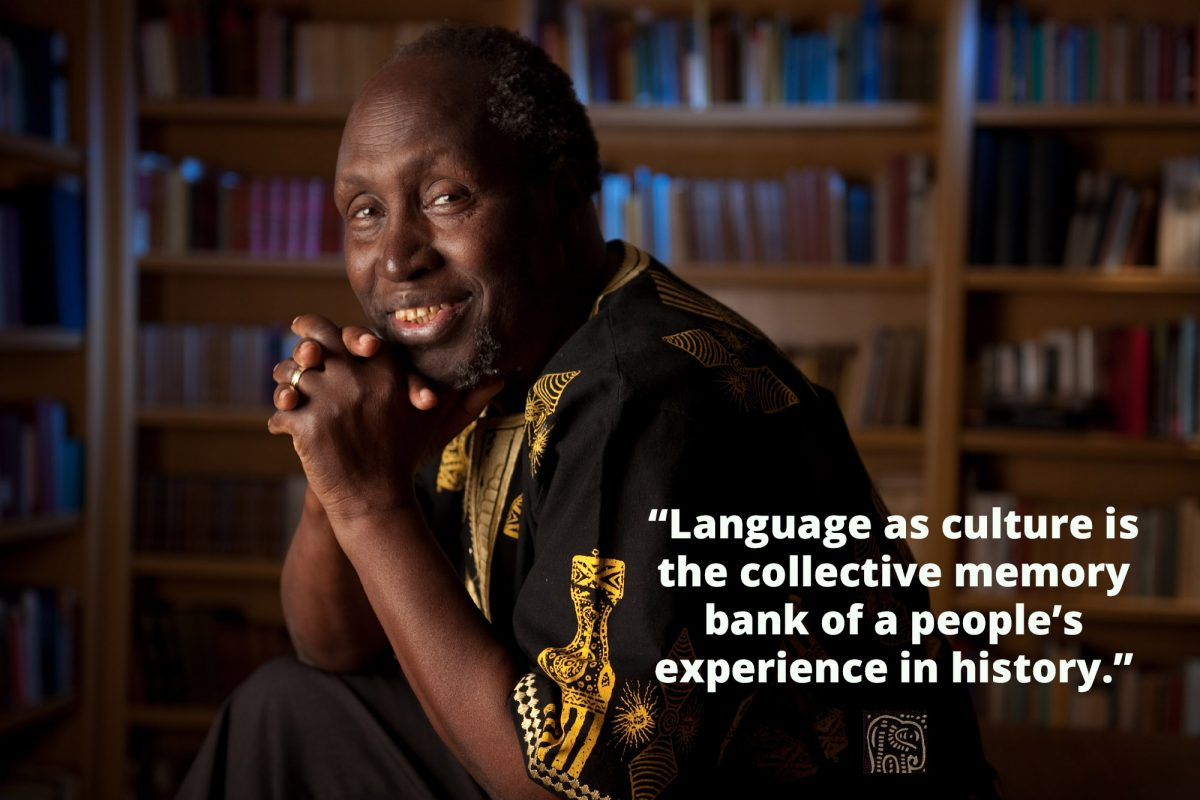
Author : Ngugi Wa Thiong’o


Ngugi wa Thiong'o was a famous writer from Kenya. He was born on January 5, 1938, in Limuru, Kenya. He wrote many important books, and one of his most famous ones is called "Weep Not, Child," which came out in 1964. It was a big deal because it was the first important novel in English written by someone from East Africa.


As Ngugi learned more about how colonialism affected Africa, he became more aware and changed his name to his traditional one. He also started writing in the language of the Kikuyu people, who are from Kenya. Ngugi wa Thiong'o was a well known writer from Kenya who wrote important books and made a big impact on African literature.


Ngugi received bachelor’s degrees from Makerere University, Kampala, Uganda, in 1963 and from Leeds University, Yorkshire, England, in 1964. After doing graduate work at Leeds, he served as a lecturer in English at University College, Nairobi, Kenya, and as a visiting professor of English at Northwestern University, Evanston, Illinois, U.S. From 1972 to 1977 he was senior lecturer and chairman of the department of literature at the University of Nairobi.  Click here (Britannica)


Petals of Blood 


‘Petals of Blood’ is a novel written by Ngugi wa Thiong'o. This novel was published in 1977 and set in Kenya after it gained independence from colonial rule. The title of the book comes from a line in a poem by Derek Walcott called ‘The Swamp’. The story follows four characters whose lives are greatly affected by a rebellion, as they try to adapt to a rapidly changing society influenced by Western ways.


Ngugi once said in an interview in 1969 that the perfect African novel should cover the time before colonialism, during colonialism, and after independence, while also pointing toward the future. Critics believe ‘Petals of Blood’ embodies this ideal. Ngugi spent five years working on the novel, completing it in 1975 while staying at the Soviet Writers Union in Yalta.


During the book's launch in 1977, the Kenyan Vice President, Mwai Kibaki, attended, suggesting Kenya supported freedom of speech. However, Ngugi was detained and later arrested the same year after releasing his Gikuyu play, ‘I Will Marry When I Want’.


Major Characters of the Novel


Wanja

Wanja is Nyakinyua's granddaughter. She is described as smart, passionate, intuitive, and determined. When she was young, she had to stop going to school because she got involved with Kimeria, a wealthy businessman, and got pregnant. Her father didn't support her, so she had to fend for herself. She ended up working as a barmaid and prostitute. She felt deep sadness for the child she lost and always wanted to be a mother again. She moved to Ilmorog to be close to her grandmother and became friends with Munira and Abdulla.  


Munira

Munira is one of the four main characters in the story. He left his wife and his controlling, wealthy father to start fresh in Ilmorog, where he worked as a teacher. He tried hard to fit in with the community, but he always felt a bit like an outsider. Munira was deeply in love with Wanja, but she did not feel the same way about him, which made him very upset. He was not very interested in politics or the struggles of the people around him, and he usually avoided those conversations. Because he grew up in a Christian family, he often felt guilty about his own actions, especially his romantic feelings for Wanja. Munira wanted recognition from his bosses, even if they were controlled by Europeans.


Karega

Karega is a determined and passionate young man who cares deeply about fighting for the people's rights. He grew up on Munira's father's land with his mother, but he never got to know his older brother Ndinguri, who was executed during the Mau Mau Rebellion. Karega attended the prestigious Siriana school for a while, but he got kicked out for protesting against the strict and unfair rules. He stayed there for some time and was the one who came up with the idea of the journey to Ilmorog. After the journey, Karega became a teacher at the school but felt frustrated. He believed the children weren't learning about Kenya's true history and the challenges they faced in Ilmorog.


Abdulla 

Abdulla is one of the main characters in the story. He is a shopkeeper who lost his leg during the Mau Mau Rebellion, which helped Kenya gain independence. He became friends with Wanja, Karega, and Munira after they all came to Ilmorog. Abdulla lived a simple life with his adopted son Joseph and his donkey. Abdulla was intuitive but often felt cynical and pessimistic. He did not like how people in power treated them in Nairobi, and he struggled with the changes happening in Ilmorog after their trip. Karega leaving and Wanja going back to her old life deeply affected him. He spent a lot of time feeling miserable and living in poor conditions before the murder happened. 


Themes of the Novel


Colonialism: 

Colonialism reflects a long lasting impact on Kenyan society particularly through the lens of exploitation, oppression, and the disruption of traditional ways of life.


Identity and Cultural Struggles:

Ngugi wa Thiong'o explores the complexities of identity and cultural heritage in the face of modernization and Westernization.


Corruption and Injustice:

Corruption and injustice are pervasive themes throughout the novel, reflecting the reality of post-colonial Kenya. The narrative exposes the exploitation of the working class by the ruling elite and the collusion between political power and economic interests.


Capitalism: 

‘Petals of Blood’ critiques the capitalist system and its detrimental effects on society and particularly in the context of neocolonialism. This novel depicts how capitalist exploitation exacerbates poverty, inequality, and environmental degradation. It exposes the ruthless pursuit of profit at the expense of human dignity and social justice.


History, Sexuality, and Gender in Ngugi’s Petals of Blood


In this article,  Petals of Blood offers at least two models for anti-Imperial history. The first is a model of black world historical struggle. We might call this epochal struggle. The second is a model of Kenyan national struggle.


Petals of Blood is interesting, because in it we see Ngugi’s political vision widening out from a decolonising nationalism to broader anti Imperial axes of identification. Ngugi’s University of Leeds research on George Lamming in particular, and to his wider reading in Caribbean literature more generally.


It is useful here to recall that Petals of Blood is named after a line in Derek Walcott’s poem, ‘The Swamp,’ and that it alludes to at least two of V. S. Naipaul’s novels reference The Mystic Masseur and The Mimic Men as the narrative unfolds.


In Caribbean literature and in the black diaspora more generally, Ngugi discovers a shared past of world historical proportions, and a community whose grievances and possibilities are global in scope. Petals of Blood undertakes an aesthetic of reconnection in which Caribbean, African American and African struggles for liberation are mutually informing and enlivening. 


Accordingly, the affiliations of Petals of Blood are diasporic, the scale of its ambition is epic, and its structure is almost biblical. This is no exaggeration. In Homecoming, Ngugi writes that ‘there is something about the Jewish experience, the biblical experience which appeals to the West Indian novelist. Biblical man has been a slave and an exile from home’.


Kenyan national history as a generational history of struggle. The novel is using an idea of generational history, derived from Kikuyu customary institutions, to think about democratic forms of political power. 


Petals of Blood relies to some extent upon indigenous mechanisms of naming associated with circumcision and clitoridectomy. Gikuyu oral history was remembered via the significant names given annually to the circumcision age-sets, and these names link each generation to the significant historical events that accompany their rite of passage into manhood or womanhood.


The novel also draws on the Gikuyu custom of itwika, in which there was a peaceful transfer of power from one generation to the next, approximately every 30 years. This peaceful transfer of power ensured a ‘democratic’ system of government, because no generation could exercise power for all time.


There are signposts in Petals of Blood that it is reviving this idea of itwika as a form of cyclical and revolutionary democracy. Itwika was introduced when the iregi age-set revolted against a despotic king, following which power passed peacefully to the ndemi age-set who settled to cultivate the land. 


Re-historicizing the conflicted figure of Woman in Petals of Blood


‘Petals of Blood’ by Ngugi wa Thiong'o shows his interest in strong female characters like Wanja. Wanja excels in areas where women characters don't often get the spotlight. She shows strength in her connection to the land, acts as a nurturing figure for the whole village, and takes charge of her own destiny.


Wanja decides to go back to the city despite it being difficult for her, showing her determination. Even after facing a terrible ordeal of rape during the journey, she keeps going. Wanja helps improve Abdulla's business using her knowledge of advertising and marketing. She also makes a good profit for both of them by introducing the theng'eta drink.


Wanja's turn to prostitution is sad and cynical, it's also a practical solution to her problems. Despite the hardships she faces, Wanja remains a powerful and determined character throughout the story.


Wanja's character indeed represents a significant departure from traditional portrayals of women in literature, particularly within the African and postcolonial canon. She embodies agency, resilience, and resourcefulness, qualities that challenge stereotypical depictions of women as passive or dependent on men. Wanja's portrayal resonates strongly with many feminists who appreciate her as a symbol of female empowerment and strength.


As Govind Narain Sharma suggests, Wanja is the spirit and earth of Kenya, humiliated, exploited and ill used . This all affirming acceptance of Ngugi's use of Wanja as trope has left him open to other important and little discussed criticism that has gone unanswered; or perhaps the lack of discussion is the answer in itself.


Ngugi's Marxist philosophies and that he also complicates this characterization with the use of Kenyan women's historical specificity. The fact of and meaning behind this specificity eludes Stratton's criticism precisely because her critique is Western feminist before it is postcolonial. 


In bringing to light the historical position of Kenyan women at the time the book takes place, to illuminate Wanja's character in such a way that we can see her, like Munira, Karega, and Abdulla, as a very real representative of the Kenyan nation.


The relationship between women, land, and sexuality than Ngugi's politics: it is also related to Gikuyu tradition. Carolyn Martin Shaw argues, the Gikuyu women do most of the extensive heavy labour in the fields. Thus, as Wanja works the fields with the Ndemi Nyakinyua Group and feels, in her ripening relationship with Karega, "about to flower" , she may be seen as culturally specific as well as archetypal.


According to Gikuyu tradition, woman is associated with land and land transfer; she functions as a mark of purity in this process. 


As Cora Ann Presley explains:

Women of Gikuyu tradition played an important role on ceremonial occasions, acting as witnesses and participants in rituals of primary importance to the community the ceremony of transfer was not complete without the presence and involvement of the Kikuyu participant's wives in the ritual that finalized the transfer of land. In another case when the kiama elders wished to purify a village women's participation in the ceremony was required.


References


  • Nicholls, BL. “History, Intertextuality and Gender in Ngugi wa Thiong’o’s Petals of Blood.” Moving Worlds: A Journal of Transcultural Writings, 2014, pp. 71-76. E-print, https://eprints.whiterose.ac.uk/97268/ . Accessed 28 January 2024.


  • Open AI. "Chat GPT-3.5"


  • Roos, Bonnie. “Re-Historicizing the Conflicted Figure of Woman in Ngugi’s ‘Petals of Blood.’” Research in African Literatures, vol. 33, no. 2, 2002, pp. 154–70. JSTOR, http://www.jstor.org/stable/3820979 . Accessed 28 Jan. 2024.


Thanks for reading. 

Words : 2072


Monday, 22 January 2024

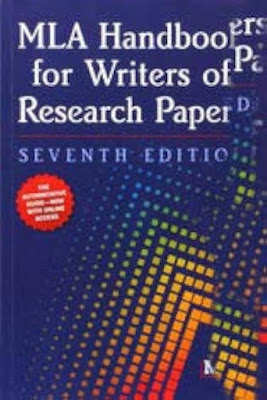
Evaluating Sources: MLA Handbook for Writers of Research Papers (7th Edition)

 Research Paper as a form of Communication


Hello Readers!

   I am going to write a blog on Research as a form of communication , assigned by Vaidehi Ma’am , DOE, MKBU. In which i am going to write on that while reading this particular topic of Research Paper as a form of Communication, in which what i understand ? All the points are from the book named 'MLA Handbook for Writers of Research Papers'.


What is Research writing


Research writing is a type of writing where you use information from different sources like books, articles, the internet, and experts to convince or educate others about a specific idea. 


People do research to learn more about something they find interesting about what which they want to Research.   


It comes in various forms, such as articles in journals, magazines, or web pages. People like academics, journalists, or anyone interested in a topic can do research writing either alone or by working together with others. 


The  major goal of the particular research  is that to present a point of view which supported by evidence and help readers understand more about a particular subject. 


Research is like going on an adventure to find information. You can explore books, chat with experts, or even dive into the vast ocean of the internet. It's all about gathering bits and pieces of knowledge.


The essential components or building blocks of research writing are the same no matter what kind of question you are answering or what kind of reader you are assuming as you share your answer. Research is the physical process of gathering information and the mental process of deriving the answer to your question from the information you gathered. Research writing is the process of sharing the answer to your research question along with the evidence on which your answer is based, the sources you used, and your own reasoning and explanation. By Lumen Learning


Form of Writing Communication


Writing communication is a key and it is an art of expressing thoughts and ideas. Research is about learning new things. 


A research paper is a form of written communication, ike other kinds of nonfiction writing-letters, memos, reports, essays, articles, books-it should present information and ideas clearly and effectively. You should not let the mechanics of gathering source materials; taking notes, and documenting sources make you forget to apply the knowledge and skills you have acquired through previous writing experiences.


Different Forms


Essays that Educate: Ever written an essay for school? That's written communication right there! Research helps turn your essay into a treasure trove of knowledge, making your ideas not just interesting but also backed by solid facts.


Incredible Articles: Journalists use written communication to tell captivating stories. Research ensures their articles are not just captivating but also trustworthy. Ever read a news article and thought, "Wow, that's fascinating!"? Thank research for that!


Blogging Brilliance: Ah, the world of blogs! Anyone can be a blogger, sharing their thoughts and discoveries. Research transforms your blog into a reliable source of information, attracting readers who hunger for knowledge.


Business Bonanza - Reports and Proposals: In the professional realm, written communication is key. Research-backed reports and proposals showcase your expertise and make a compelling case for your ideas.


Role of Research in Papers


It's the foundation, the evidence, the backbone that gives your paper credibility. Whether you're exploring the mysteries of black holes or dissecting the impact of climate change, research turns your words into a powerhouse of information.


Key Elements of Research Paper Communication :


Introduction - Setting the Stage: Just like starting a conversation, the introduction of your research paper sets the tone. It tells readers what to expect, enticing them to delve deeper into your exploration.


Literature Review - Joining the Conversation: Picture a big, ongoing discussion about your topic. The literature review is where you jump in, citing what others have said and establishing where your unique voice fits into the conversation.


Methodology - Revealing Your Toolkit: It's like sharing your secrets. How did you gather your data? What tools did you use? The methodology section lets readers peek behind the curtain, understanding the process behind your discoveries.


Results - Unveiling the Treasure: The heart of your paper – the results! Here's where you showcase what you found. Tables, graphs, and charts become your visual aids, helping readers grasp the essence of your research.


Discussion - Interpreting the Findings: Like a post-game analysis, the discussion section interprets your results. What do they mean? How do they contribute to the bigger picture? It's your chance to guide readers through the maze of your discoveries.


Conclusion - Wrapping it Up: Just like ending a conversation, the conclusion ties everything together. It's not just a summary; it's your final pitch, leaving a lasting impression on your readers.


References


  • MLA Handbook for Writers of Research Papers. United States, Modern Language Association of America, 2009.


  • Open AI. "Chat GPT-3.5"


Hi Papa : Movie Review

      Hi Nanna - Movie Review  जान से भी में तुझको हूं प्यारी... कहता फिरता है की में हूं प्यारी... में हुं आँखें तेर...