Sunday, 7 April 2024

The Piano and The Drums by Gabriel Okara & To the Negro-American Soldiers by Leopord Sedar Senghor

 The Piano and The Drums by Gabriel Okara

&

To the Negro-American Soldiers by Leopord Sedar Senghor


Hello Readers!!! I am Anjali Rathod. I am going to write one another blog on Two African Poems : 1) The Piano and The Drums By Gabriel Okara & 2) To the Negro-American Soldiers by Leopard Seghar Sengho. This task was assigned by Megha Trivedi Ma’am, Visiting Faculty Lecturer, Department Of English, MKBU. 


Original Poem : The piano and the Drums  by Gabriel Okara


When at break of day at a riverside


I hear jungle drums telegraphing


the mystic rhythm, urgent, raw


like bleeding flesh, speaking of


primal youth and the beginning,


I see the panther ready to pounce,


the leopard snarling about to leap


and the hunters crouch with spears poised.


And my blood ripples, turns torrent,


topples the years and at once I’m 


in my mother’s laps a suckling;


at once I’m walking simple


paths with no innovations


rugged, fashioned with the naked


warmth of hurrying feet and groping hearts


in green leaves and wild flowers pulsing.


Then I hear a wailing piano


solo speaking of complex ways


in tear- furrowed concerto;


of far away lands


and new horizons with


coaxing diminuendo,  counterpoint, 


crescendo, but lost in the labyrinth of its complexities, it ends in the middle of a phrase at a daggerpoint


And I lost in the morning mist


of an age at a riverside keep


wandering in the mystic rhythm


of jungle drums and concerto.


Analysis of the poem


The poem ‘The Piano and the Drums’ contrasts the traditional African way of life with the encroaching influence of the modern world. The poetic persona uses the juxtaposition of the piano and the drums to symbolize this clash of cultures.


The setting of the poem spans from the advent of civilization to the present day, chronicling the gradual erosion of African cultural purity. The central theme examines the impact of foreign, Western influences on African society. 


The poet uses the effect of music on the persona as an analogy to illustrate this overarching theme. The pure, primal rhythm of the drums represents the indigenous African experience, while the piano embodies the trappings of modern, Westernized life.


Through this musical metaphor, the poem seeks to emphasize the unspoiled, authentic nature of traditional African culture prior to the interference of colonial civilization and its attendant values. The tension between the piano and the drums mirrors the broader clash between the local and the global, the indigenous and the imported, that lies at the heart of the poem's message. Through vivid imagery and carefully crafted metaphors, Okara portrays the drums as representing the primal, natural rhythms of traditional African life, while the piano symbolizes the complex, cerebral qualities of Western culture. The way the speaker reacts to each "instrument" is central to the poem's expression of his inner turmoil.


In essence, Gabriel Okara perceives the desecration of the African way of life from the musical perspective, and comes out to lament about it through the instrument of poetry.


In the First Stanza , of the poem the description of the drums and piano follow a similar tripartite structure. First, we are presented with the sensory experience of the instruments' sounds, the "mystic rhythm" and "urgent" beating of the drums, versus the "wailing" and "tear furrowed concerto" of the piano. This establishes an immediate contrast between the raw, visceral nature of the traditional and the layered, emotive qualities of the Western.


The second part of each stanza delves into what the music "speaks of"  : the drums evoking primal life and natural beauty, the piano conjuring "complex ways" and "far away lands." Here, Okara highlights the thematic dichotomy at the heart of the poem's cultural conflict.


Finally, each stanza ends with the speaker's personal reaction, the drums stirring memories of hunting and a simple, fulfilling life, the piano seducing him with its sophistication even as it seems to "crumble upon itself" in its own complexity.


The progression of the poem charts the speaker's wavering between these two worlds. Though the drums initially appear to hold sway, the piano's allure is powerful enough to leave him ultimately "lost" and "wandering aimlessly" as the two musical forces intertwine around him. This final stanza, with its calmer, more reflective tone, conveys the depth of his inner turmoil, a profound sense of confusion and displacement that many can relate to in our globalized age.


The Major themes in The Piano and the Drums 


Theme of Innocence

The theme of innocence is explored through the depiction of African culture in this poem. From the very first line, where the events take place "at break of day," the idea of innocence is already suggested. The start of a new day is fresh and untouched, hinting at a sense of purity.


This theme of innocence is further conveyed through the sound of the jungle drums. The poem describes the drums as having a "mystic rhythm" that is "urgent" and "raw." This suggests the drumbeats are primal and unrefined, untainted by outside influences. They represent the natural, uncorrupted essence of traditional African life.


In contrast to the complex, "wailing" sounds of the piano later in the poem, the drums evoke a sense of innocence. The poem presents traditional African culture as a realm of innocence, untouched by the complications and sophistication of the Western world symbolized by the piano. This innocence is something the speaker seems to long for, even as he is drawn to the allure of the piano's "far away lands and new horizons."


Theme of innocence helps to highlight the cultural dichotomy at the heart of the poem. It shows the speaker torn between the pure, primal essence of his African roots and the temptations of the complex, Western-influenced world. This tension lies at the core of the speaker's inner conflict and confusion.


Theme of Dilemma


The poet speaks highly of African culture, but also finds European culture to be seductive, despite its flaws. The poet is unable to decide whether to let go of the inherited African culture or embrace the new European one. This is a common struggle for many educated Africans today. Many have resolved this dilemma by taking aspects from both the African and European cultures, a process known as "cultural syncretism." This allows them to combine the two cultures in a way that works for them.


The poet is torn between the cultures, unable to fully commit to one or the other. But many Africans have found a middle ground by selectively incorporating elements of both into a new, blended cultural identity.


Theme of Culture/Conflict


The poem contrasts two very different cultures, one represented by the simple, natural rhythms of drums, and the other by the complex, technical sounds of the piano. The first two stanzas depict the "drum" culture, which is set in a physically dangerous environment surrounded by wild animals. The drums represent a primal, instinctive way of life and communication. The language used is raw and urgent, conveying a sense of life close to the beginnings of humanity.


In contrast, the piano culture of the last two stanzas is described with more complex, learned language. The piano symbolizes a westernized, sophisticated way of living that is very different from the drum culture.  The poem suggests a conflict within the speaker, who is torn between these two vastly different worlds. The lack of a consistent rhyme scheme mirrors this indecision and confusion over which culture to embrace.


Ultimately, the poem explores the struggle many Africans faced in reconciling their traditional, indigenous cultures with the encroaching Western influences. The speaker is unable to fully commit to one or the other, feeling pulled in both directions.


Original Poem : To the Negro-American soldoers by Leopord Sedar Senghor


For Mercer Cook


I did not recognize you in prison under your

………..sad-colored uniform

I did not recognize you under the calabash helmet

………..without style

I did not recognize the whining sound of your

………..iron horses, who drink but do not eat.

And it is no longer the nobility of elephants, it is the

………..the barbaric weight of the prehistoric

………..monsters of the world.

Under your closed face, I did not recognize you.

I only touched the warmth of your brown hand,

………..I called myself “Afrika! ”

And I found once again the lost laughter, I hailed the ancient voices

………..and the roar of Congo waterfalls.

Brothers, I do not know whether you bombed the

………..cathedrals, the pride of Europe,

If you are the lightning of God’s hand that burned

………..Sodom and Gomorrah.

No, you are the messengers of his mercy, the

………..Spring after Winter.

To those who had forgotten how to laugh-only

………..smile obliquely

Who knew nothing but the savory flavor of

………..tears and the vexing stench of blood

You bring the Season of Peace and hope to

………..end of the delay.

And their night is filled with milky sweetness, the blue

………..fields of the sky are covered with flowers, silence sings

………..soothingly.

You bring them the sun. The air beats with whispers

………..liquids and crystalline chirping and beating

………..silky wings

The aerial cities are tepid with nests.

Through the streets joy streamed, the boys play with

………..their dreams

Men dance before of their machines and

………..surprised themselves singing.

Schoolgirls’s eyelids are rose petals, and

………..fruits ripen in the virgins’ breasts

And the women’s hips—Oh, sweetness—

………..grow generously heavy.

Black brothers, warriors whose mouths are flowers that

………..sing

—Oh! the delight to live after Winter—I salute you

………..like messengers of peace.


Analyses of the poem


Leopold Sedar Senghor was a Senegalese poet, politician and cultural theorist who was one of the founders of the Negritude movement. ‘To the Negro-American Soldiers’ was likely a poem he wrote to honor and express gratitude to African American soldiers who fought in the World Wars. Honoring the Sacrifice and Resilience of the Negro-American Soldier in Senghor's Poem.


He founding father of the Negritude movement, paid poignant tribute to the African American soldiers who fought for their country in his 1945 poem ‘To the Negro-American Soldiers’. He writes of their "black bodies" marching into battle, their "scarred faces" etched with the hardships of war.


But Senghor's poem goes beyond simple veneration. It also speaks to the inherent dignity and resilience of the Negro-American soldier, who Senghor sees as the embodiment of the struggle for black liberation worldwide. He addresses them directly, praising their "stubborn patience" in the face of oppression and their "constructive force" that will one day break the chains of colonialism.


The poem's imagery is rich and evocative. Senghor depicts the soldiers as "the sap in the oak, the leap of the stream, the shudder of the earth"  linking their warrior spirits to the very forces of nature. He also invokes their African heritage, seeing them as "brothers" who will carry the fight for freedom back to the ancestral continent.


‘To the Negro-American Soldiers’ is a passionate call to recognize the humanity and heroism of these men, who Senghor believes will play a pivotal role in the global movement for racial justice. In honoring their sacrifice, he elevates the entire African diaspora, providing a powerful counter narrative to the racist ideologies that sought to dehumanize them.


Senghor's poem is a moving testament to the indomitable spirit of the Negro-American soldier a spirit that, even in the face of unimaginable adversity, refused to be broken. Its message of black pride, resilience and revolutionary potential continues to resonate powerfully today.


References : 

Gemini - chat to supercharge your ideas, https://gemini.google.com/app.


Words: 2026 

Images: 2

Videos: 1

Sunday, 3 March 2024

A Dance of the Forests by Wole Soyinka

 A Dance of the Forests by Wole Soyinka


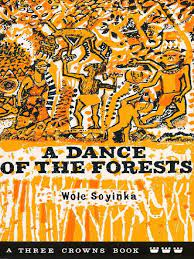
This blog post aims to explore and analyze aspects of "A Dance of the Forests" by the renowned Nigerian writer Wole Soyinka. It is part of a thinking Activity and assigned by Megha Trivedi, a faculty member in the Department of English at Maharaja Krishnakumarsinhji Bhavnagar University (MKBU) in Bhavnagar, India.


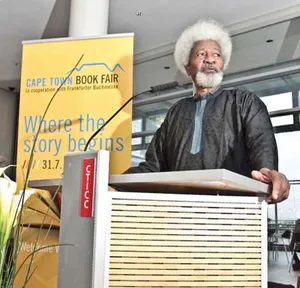
Wole Soyinka

Wole Soyinka was a Nigerian playwright and political activist who received the Nobel Prize for Literature in 1986. He sometimes wrote of modern West Africa in a satirical style, but his serious intent and his belief in the evils inherent in the exercise of power were usually evident in his work as well.

A member of the Yoruba people, Soyinka attended Government College and University College in Ibadan before graduating in 1958 with a degree in English from the University of Leeds in England. Upon his return to Nigeria, he founded an acting company and wrote his first important play, A Dance of the Forests (produced 1960; published 1963), for the Nigerian independence celebrations. The play satirizes the fledgling nation by stripping it of romantic legend and by showing that the present is no more a golden age than was the past.


He wrote several plays in a lighter vein, making fun of pompous, Westernized schoolteachers in The Lion and the Jewel (first performed in Ibadan, 1959; published 1963) and mocking the clever preachers of upstart prayer-churches who grow fat on the credulity of their parishioners in The Trials of Brother Jero (performed 1960; published 1963) and Jero’s Metamorphosis (1973). But his more serious plays, such as The Strong Breed (1963), Kongi’s Harvest (opened the first Festival of Negro Arts in Dakar, 1966; published 1967), The Road (1965), From Zia, with Love (1992), and even the parody King Baabu (performed 2001; published 2002), reveal his disregard for African authoritarian leadership and his disillusionment with Nigerian society as a whole.


Other notable plays included Madmen and Specialists (performed 1970; published 1971), Death and the King’s Horseman (1975), and The Beatification of Area Boy (1995). In these and Soyinka’s other dramas, Western elements are skillfully fused with subject matter and dramatic techniques deeply rooted in Yoruba folklore and religion. Symbolism, flashback, and ingenious plotting contribute to a rich dramatic structure. His best works exhibit humour and fine poetic style as well as a gift for irony and satire and for accurately matching the language of his complex characters to their social position and moral qualities.(Britannica)


A Dance of the Forest 

  1. A  proposed alternative end of the play 'A Dance of the Forest' by Wole Soyinka


As the chaos and violence reach a crescendo on stage, with the Forest Head and Aroni engaged in a brutal struggle, a sudden hush falls over the scene. The previously raucous Forest Spirits and Half-Child slowly back away, their faces etched with a mix of fear and awe.


From the shadows emerges a towering figure, shrouded in a shimmering cloak woven from vines and leaves. It is the embodiment of the Forest itself, ancient and powerful. With a sweep of its arm, the Forest Being separates the warring factions.


"Enough!" its voice booms, shaking the very trees. "You foolish beings squabble and destroy like selfish children, blind to the consequences of your actions."


The Forest Head and Aroni freeze, transfixed by the entity's commanding presence. The Forest Being continues:


"This land cries out, its rivers choked with filth, its trees hewn down without remorse. The scattered tribes have strayed far from the path of balance and respect for nature's bounty."


It levels an accusatory limb at the assembled figures. "You all bear the stain of greed and corruption upon your souls. Until you learn humility and heal the wounds you've inflicted, harmony shall remain forever out of reach."


With a wave of its hand, the Forest Being banishes the stunned beings back to their realms. As they scatter, it turns its terrible gaze outward.


"The dance has just begun. The forests will have their reckoning."


The stage is plunged into darkness as a haunting chorus of animal cries and creaking trees rises, signaling the start of nature's wrath.


Here are some proposed alternative endings for Wole Soyinka's play "A Dance of the Forests":


Redemptive Ending:

As the chaos reaches a fever pitch, a blinding light envelops the stage. From this light emerges a radiant being, a manifestation of the life force of the forests itself. With a sweep of its ethereal arms, it calms the warring factions. In a mesmerizing speech, it reminds them all of their interconnectedness and need for balance with nature.


One by one, the angry spirits, gods, and humans are humbled. Eshuoro renounces her curse. Ogun sheaths his sword. The Forest Head and Aroni embrace as equals. Even Demoke realizes his arrogance and vows to make amends. The play ends on a transcendent note, with all pledging to heal the rift between humanity and the natural world.


Pyrrhic Victory Ending:


Demoke finally succeeds in ripping off the mask of the powerful Eshuoro. But in doing so, he unleashes an unspeakable evil force that has been trapped behind it. This primordial malevolence turns on all - human, spirit, and god alike.


One by one, the various factions are devoured by this ancient evil as punishment for their sins against nature. Even Ogun's might cannot stop it. In the end, only the Forest Head is left, having futilely tried to warn them. The stage is empty except for the Forest Head's ghostly laments over their hubris as the curtain falls.


Open-Ended Ending:

After the disastrous gathering and struggles, Demoke finally understands the need for humility and environmental stewardship. He climbs down from the totem pole, a changed man. Likewise, the Forest Head, Ogun, and others also have realized their errors.


Supernatural Intervention Ending:

As the violence and mayhem reach a fevered pitch, suddenly the stage is plunged into darkness. When the lights return, all the human characters have vanished without a trace.


Only the nature spirits like the Forest Head, Aroni, and Eshuoro remain, looking around bewildered. A thunderous voice then echoes from the heavens, chastising the deities for allowing the destructive hubris of mankind to go unchecked for too long.


The voice proclaims that for their negligence, the forests will be stripped of human inhabitants until they learn to be better custodians. The spirits are left alone on the stage, sobered by this turn of events and contemplating how to one day welcome humankind back into the forests.


Sacrificial Redemption Ending:

After surveying the wreckage of the gathering, Demoke has an epiphany about the havoc his arrogance has wrought. Resolving to make amends, he climbs back atop the totem pole.


From this height, he delivers an impassioned plea for forgiveness from all - the spirits, gods, and even the living forests themselves. Recognizing there is no other path forward, Demoke then sacrifices his life by leaping from the pole.


His death shakes everyone present. In a shocking twist, Demoke's selfless act purifies the stage. The curse over the land is lifted. Former adversaries like Ogun and Eshuoro embrace. Nature and humankind are metaphorically rejoined as one in a spiritual rebalancing. The play closes with Demoke's sacrifice serving as the catalyst for harmony.


Human Return to Nature Ending:


Disgusted by the escalating violence and unable to achieve their goals, the gods and spirits alike abandon the debacle and retreat back into the forests. Only the human characters remain on the stage amidst the ruins.


With the supernatural entities gone, the humans have an existential moment of clarity. They realize their perceived supremacy over nature was hubris. Chastened, they too exit the stage, resolving to reconnect with the natural world they have become estranged from.


Write a note on the play 'A Dance of the Forest' by Wole Soyinka with the reference of the document titled "CRITICAL COMMENTARY ON A DANCE OF THE FORESTS"


The play begins with the arrival of two dead ancestors who have been summoned by the living, but instead of being revered, they are shunned as "obscenities" due to their bitter resentment. The Forest Father character then forces four living characters to confront their true selves and the repetitive patterns of their weaknesses and crimes, along with the company of the dead couple. The play is described as being rooted in ritual and song, and as reviving the awareness of the theatrical tradition's connection to these elements. Soyinka's work is praised for its poetic and inventive use of language, likened to the impact of Irish dramatists on the English language.


Wole Soyinka's play 'A Dance of the Forests' deals with the theme of acknowledging and confronting one's past mistakes and misdeeds. The play explores the conflict between the desire of the dead ancestors to hold the living accountable for their actions, and the reluctance of the living to face judgment for their sins.


The African Forum praised Wole Soyinka's work for reviving the connection between contemporary theater and its roots in ritual and song, which has been largely forgotten. This echoes the rare achievements of dramatists like Federico García Lorca and Bertolt Brecht in restoring an awareness of what has been lost in mainstream theater traditions. Soyinka's play "The Road," which was presented in London during the Commonwealth Arts Festival, was highly acclaimed for its innovative and revitalizing use of the English language, likened to how Irish playwrights over the past two centuries have reimagined and reinvigorated the language. His novel "The Interpreters" was also lauded by an American critic as a work of genius, drawing comparisons to James Joyce.


Work cited


A Dance of the Forests by Wole Soyinka

 A Dance of the Forests by Wole Soyinka


This blog post aims to explore and analyze aspects of "A Dance of the Forests" by the renowned Nigerian writer Wole Soyinka. It is part of a thinking Activity and assigned by Megha Trivedi, a faculty member in the Department of English at Maharaja Krishnakumarsinhji Bhavnagar University (MKBU) in Bhavnagar, India.


Wole Soyinka

Wole Soyinka was a Nigerian playwright and political activist who received the Nobel Prize for Literature in 1986. He sometimes wrote of modern West Africa in a satirical style, but his serious intent and his belief in the evils inherent in the exercise of power were usually evident in his work as well.

A member of the Yoruba people, Soyinka attended Government College and University College in Ibadan before graduating in 1958 with a degree in English from the University of Leeds in England. Upon his return to Nigeria, he founded an acting company and wrote his first important play, A Dance of the Forests (produced 1960; published 1963), for the Nigerian independence celebrations. The play satirizes the fledgling nation by stripping it of romantic legend and by showing that the present is no more a golden age than was the past.


He wrote several plays in a lighter vein, making fun of pompous, Westernized schoolteachers in The Lion and the Jewel (first performed in Ibadan, 1959; published 1963) and mocking the clever preachers of upstart prayer-churches who grow fat on the credulity of their parishioners in The Trials of Brother Jero (performed 1960; published 1963) and Jero’s Metamorphosis (1973). But his more serious plays, such as The Strong Breed (1963), Kongi’s Harvest (opened the first Festival of Negro Arts in Dakar, 1966; published 1967), The Road (1965), From Zia, with Love (1992), and even the parody King Baabu (performed 2001; published 2002), reveal his disregard for African authoritarian leadership and his disillusionment with Nigerian society as a whole.


Other notable plays included Madmen and Specialists (performed 1970; published 1971), Death and the King’s Horseman (1975), and The Beatification of Area Boy (1995). In these and Soyinka’s other dramas, Western elements are skillfully fused with subject matter and dramatic techniques deeply rooted in Yoruba folklore and religion. Symbolism, flashback, and ingenious plotting contribute to a rich dramatic structure. His best works exhibit humour and fine poetic style as well as a gift for irony and satire and for accurately matching the language of his complex characters to their social position and moral qualities.(Britannica)


A Dance of the Forest 

  1. A  proposed alternative end of the play 'A Dance of the Forest' by Wole Soyinka


As the chaos and violence reach a crescendo on stage, with the Forest Head and Aroni engaged in a brutal struggle, a sudden hush falls over the scene. The previously raucous Forest Spirits and Half-Child slowly back away, their faces etched with a mix of fear and awe.


From the shadows emerges a towering figure, shrouded in a shimmering cloak woven from vines and leaves. It is the embodiment of the Forest itself, ancient and powerful. With a sweep of its arm, the Forest Being separates the warring factions.


"Enough!" its voice booms, shaking the very trees. "You foolish beings squabble and destroy like selfish children, blind to the consequences of your actions."


The Forest Head and Aroni freeze, transfixed by the entity's commanding presence. The Forest Being continues:


"This land cries out, its rivers choked with filth, its trees hewn down without remorse. The scattered tribes have strayed far from the path of balance and respect for nature's bounty."


It levels an accusatory limb at the assembled figures. "You all bear the stain of greed and corruption upon your souls. Until you learn humility and heal the wounds you've inflicted, harmony shall remain forever out of reach."


With a wave of its hand, the Forest Being banishes the stunned beings back to their realms. As they scatter, it turns its terrible gaze outward.


"The dance has just begun. The forests will have their reckoning."


The stage is plunged into darkness as a haunting chorus of animal cries and creaking trees rises, signaling the start of nature's wrath.


Here are some proposed alternative endings for Wole Soyinka's play "A Dance of the Forests":


Redemptive Ending:

As the chaos reaches a fever pitch, a blinding light envelops the stage. From this light emerges a radiant being, a manifestation of the life force of the forests itself. With a sweep of its ethereal arms, it calms the warring factions. In a mesmerizing speech, it reminds them all of their interconnectedness and need for balance with nature.


One by one, the angry spirits, gods, and humans are humbled. Eshuoro renounces her curse. Ogun sheaths his sword. The Forest Head and Aroni embrace as equals. Even Demoke realizes his arrogance and vows to make amends. The play ends on a transcendent note, with all pledging to heal the rift between humanity and the natural world.


Pyrrhic Victory Ending:


Demoke finally succeeds in ripping off the mask of the powerful Eshuoro. But in doing so, he unleashes an unspeakable evil force that has been trapped behind it. This primordial malevolence turns on all - human, spirit, and god alike.


One by one, the various factions are devoured by this ancient evil as punishment for their sins against nature. Even Ogun's might cannot stop it. In the end, only the Forest Head is left, having futilely tried to warn them. The stage is empty except for the Forest Head's ghostly laments over their hubris as the curtain falls.


Open-Ended Ending:

After the disastrous gathering and struggles, Demoke finally understands the need for humility and environmental stewardship. He climbs down from the totem pole, a changed man. Likewise, the Forest Head, Ogun, and others also have realized their errors.


Supernatural Intervention Ending:

As the violence and mayhem reach a fevered pitch, suddenly the stage is plunged into darkness. When the lights return, all the human characters have vanished without a trace.


Only the nature spirits like the Forest Head, Aroni, and Eshuoro remain, looking around bewildered. A thunderous voice then echoes from the heavens, chastising the deities for allowing the destructive hubris of mankind to go unchecked for too long.


The voice proclaims that for their negligence, the forests will be stripped of human inhabitants until they learn to be better custodians. The spirits are left alone on the stage, sobered by this turn of events and contemplating how to one day welcome humankind back into the forests.


Sacrificial Redemption Ending:

After surveying the wreckage of the gathering, Demoke has an epiphany about the havoc his arrogance has wrought. Resolving to make amends, he climbs back atop the totem pole.


From this height, he delivers an impassioned plea for forgiveness from all - the spirits, gods, and even the living forests themselves. Recognizing there is no other path forward, Demoke then sacrifices his life by leaping from the pole.


His death shakes everyone present. In a shocking twist, Demoke's selfless act purifies the stage. The curse over the land is lifted. Former adversaries like Ogun and Eshuoro embrace. Nature and humankind are metaphorically rejoined as one in a spiritual rebalancing. The play closes with Demoke's sacrifice serving as the catalyst for harmony.


Human Return to Nature Ending:


Disgusted by the escalating violence and unable to achieve their goals, the gods and spirits alike abandon the debacle and retreat back into the forests. Only the human characters remain on the stage amidst the ruins.


With the supernatural entities gone, the humans have an existential moment of clarity. They realize their perceived supremacy over nature was hubris. Chastened, they too exit the stage, resolving to reconnect with the natural world they have become estranged from.

Write a note on the play 'A Dance of the Forest' by Wole Soyinka with the reference of the document titled "CRITICAL COMMENTARY ON A DANCE OF THE FORESTS"


Work cited


Hi Papa : Movie Review

      Hi Nanna - Movie Review  जान से भी में तुझको हूं प्यारी... कहता फिरता है की में हूं प्यारी... में हुं आँखें तेर...