Friday, 8 December 2023

Assignment paper 204 - Contemporary Western theories and Film Studies

 Name : Anjali M. Rathod

Enrollment no. : 4069206420220024

Roll no. : 02

Batch : M.A. Sem. 3 (2022-24)

Paper no. : 204 - Contemporary Western theories and Film Studies

Email Address: rathodanjali20022002ui@gmail.com

Submitted to : Smt. S.B. Gardi, Department of English, Maharaja Krishnakumarsinhji Bhavnagar University, Bhavnagar - 364002


                           Feminist Criticism 


Introduction : 


       Feminist literary criticism has almost gone through two centuries up to now. This literary criticism is based on the reflection of women’s situation by themselves in the long term and achievement of their specific and practical action. Thus, feminism is the source of feminist literary criticism. Feminism has experienced two waves. The First Wave, also called liberal feminism, usually refers to the social movement that women fought for their legal right to vote and the basic civil rights in America and Britain from 1890 to 1920. In the First Wave, women had successfully strived for their civil rights and the opportunity of attending higher education and finding jobs in specific industry areas.


      More important was that this wave was a perquisite for the deeper and subtle social works by feminists later. The Second Wave also known as the Women’s Liberation Movement, which focused on the differences between female and male and discussed the origin and operation of gender discrimination in ideology, culture and society. Owing to this ideology of the feminists, the early development of the feminist literary criticism tried to seek a chance and approach to change the mechanism of literature between personal and political.


The Development of Feminist Literary Criticism 


    The modern feminist movement originates from The Second Sex by Simone de Beauvoir “one is not born, but rather becomes, a woman." Over these years, the concept of being equal with male has developed into different stages and various feminist schools have come into being: radical feminism, liberal feminism, socialist feminism, black feminism, post-modem feminism and psycho-analytical feminism.


      According to the schools of ideologies and thoughts, feminism can be mainly divided into four groups: Liberal feminism, Radical feminism, socialist feminism and Marxist feminism. Because of differences of historical and cultural inheritance, western feminist literary criticism mainly consists of American school, Britain school and French school. These schools were not totally isolated, instead they communicated, affected and promoted each other. No matter what kind of schools, they all made great contributions to the development and maturity of feminist literary criticism.


            According to Lisa Tuttle, the final goal of feminist criticism is “to develop and uncover a female tradition of writing,” “to analyze women writers and their writings from a female perspective", “to rediscover old texts", “to interpret symbolism of women's writing so that it will not be lost or ignored by the male point of view” “to resist sexism in literature and to increase awareness of the sexual politics of language and style".


Feminist criticism is broadly divided into two categories; feminist critique and Gynocriticism.


1. Feminist Critique: Feminist critique studies women as a reader. Here women read literature produced by male writers. It studies the ideologies underlying literature and literary theories. It exposes the stereotypical images of women in Literature. It also unearths neglected, suppressed, obliterated women writers in literary history by male critics. 


     Feminist critics argue that the portrayal of women in literature is not authentic as this portrayal is presented by men from their own point of view. In short, this portrayal of women is what men think women are. It is a man’s conception of what a woman should be. Men look at women from their point of view and even teach women to look at themselves from men’s point of view. So it exposes such false depiction of women in literature, films, culture and other popular media.


2. Gynocriticism: Gynocriticism studies women as producer and creator of literature and arts. It studies the problems of female creative writers. Gynocritics develop new methods of studying women writers rather than adopting the models created by male writers. It also adopts theories of structuralism, post-structuralism, psychoanalysis and Marxism for its purpose. 

        Women must free themselves from male literary tradition and discover the women writers buried in the past and create a separate literary tradition of women writers only. Women must use literature to express their own thoughts, experiences and feelings and emotions. Gynocriticism emphasizes that women should not rely totally on theories developed by male writers about literature and art. Instead, they should develop their own theory according to women’s creativity and female experiences. Women should develop their own language suitable/ proper to express female experiences, emotions and feelings.


Virginia Woolf (1882to 21941) is one of the most important feminist critics of 20thcentury. She continually wrote about the problems faced by women throughout the history. Her essay Shakespeare's sister examines how women faced social, cultural and economic problems to realize their literary ambitions. Their literary dreams were thwarted at every stage by patriarchal society and male domination. She begins the essay by saying that there is very little about the lives of women in history.


       In fact, women do not have control over their lives. She questions what would have happened if Shakespeare would have a very talented, gifted and imaginary sister like himself. Probably, she could not have gone to school and never got any type of education. Nobody would have encouraged the literary talent and ambitions. Her parents could have forced her to marry at the early age to man of their choice. If she could have resisted her parent’s marriage proposal, she would have been blackmailed emotionally or given physical punishment and forced to marry at the very young age to a boy of their choice.


     Suppose, she would have gone to London like Shakespeare to realise her literary ambitions, everybody would have poked fun at her literary ambitions. After trying hard and not getting any opportunity to realise her literary ambitions in London, circumstances and utter poverty could have forced her to commit suicide.


Room of One's Own is another seminal book in feminist criticism. The book discusses problems faced by women who want to be a creative writer. The title of the book is very significant as it indicates the general thesis of the book that if a woman wants to be a successful creative writer she must have her own room, a private space where she can write. If a woman wants to own her room, she must have financial freedom and independence. 


    Virginia Woolf further argues that women didn't have such financial freedom and hence they were unable to realise their literary ambitions. If they do have creative genius and talent they were kept away from education and hence financial freedom and independence. In case a woman overcame such hindrances and difficulties and became a successful creative writer she was harassed by the society. She would have not gotten any recognition from society. She explains how women were denied any opportunity for education while their male counterparts got every opportunity to get education and develop their creative ability.


Conclusion : 


      Feminist literary criticism is known as the critical analysis of literary works based on the feminist perspective. In other words, feminist literary criticism is a kind of literary criticism on the basis of feminist theory or the politics of feminism more precisely. In particular, it also can be explained as using ideological discourses and feminist rules to study language, structure and being of literature. “This school of thought seeks to describe and analyze the ways in which literature portrays the narrative of male domination in regard to female bodies by exploring the economic, social, political, and psychological forces embedded within literature.”


Thank You… .


Words : 1258


Assignment 203 - The Postcolonial Studies

 Name : Anjali M. Rathod

Enrollment no. : 4069206420220024

Roll no. : 02

Batch : M.A. Sem. 3 (2022-24)

Paper no. : 203 - The Postcolonial Studies

Email Address: rathodanjali20022002ui@gmail.com

Submitted to : Smt. S.B. Gardi, Department of English, Maharaja Krishnakumarsinhji Bhavnagar University, Bhavnagar - 364002


          Wide Sargasso Sea with the

      perspective of post colonialism 


Introduction of the Author : 


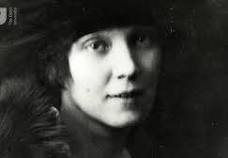
          Jean Rhys, (born August 24, 1890, Roseau, Dominica, Windward Islands, West Indies—died May 14, 1979, Exeter, Devon, England), West Indian novelist who earned acclaim for her early works set in the bohemian world of Europe in the 1920s and ’30s but who stopped writing for nearly three decades, until she wrote a successful novel set in the West Indies.


Jean Rhys's work is animated by a spirit of wanting to speak for those who are voiceless. The daughter of a Welsh doctor and a Creole mother, Rhys lived and was educated in Dominica until she went to London at the age of 16 and worked as an actress before moving to Paris. 


    Jean Rhys was encouraged to write by the English novelist Ford Madox Ford. Her first book, a collection of short stories, The Left Bank (1927), was followed by such novels as Postures (1928), After Leaving Mr. Mackenzie (1931), Voyage in the Dark (1934), and Good Morning, Midnight (1939). After moving to Cornwall she wrote nothing until her remarkably successful Wide Sargasso Sea (1966), a novel that reconstructed the earlier life of the fictional character Antoinette Cosway, who was Mr. Rochester’s mad first wife in Charlotte Brontë’s Jane Eyre. Tigers Are Better-Looking, with a Selection from the Left Bank (1968) and Sleep It Off Lady (1976), both short-story collections, followed. Smile Please, an unfinished autobiography, was published in 1979.  In 1907, at the age of 16, Rhys traveled to England to attend school.


     Jean Rhys later worked as a chorus girl and a mannequin, experiencing the bohemian lifestyle of London in the early 20th century. In 1919, she married Jean Lenglet, a Dutch journalist and writer, taking his last name as her pseudonym, Jean Rhys.


Jean Rhys faced numerous personal challenges throughout her life. Her marriage to Lenglet was tumultuous, marked by infidelity and financial struggles. She battled with alcoholism and struggled to find her place in a society that often marginalized and misunderstood her.


Despite early literary success, Rhys faced a period of relative obscurity, with her works out of print and her reputation dwindling. It wasn't until the mid-20th century that her literary fortunes would change.


About the Novel : 


  "Wide Sargasso Sea" is a novel written by Jean Rhys and first published in 1966. The novel is considered a prequel to Charlotte Brontë's classic novel "Jane Eyre," as it explores the backstory of one of "Jane Eyre's" characters, Bertha Mason, the madwoman in the attic.


In the early 19th century, "Wide Sargasso Sea" tells the story of Antoinette Cosway, a Creole woman who eventually becomes the first wife of Mr. Rochester in "Jane Eyre." The novel delves into Antoinette's childhood, her troubled relationship with her family, and her marriage to Rochester. It explores themes of racial identity, colonialism, and the oppression of women.


The title "Wide Sargasso Sea" refers to the sea between the West Indies and the coast of Florida, which is known for its swirling currents and the Sargasso Sea's floating seaweed. Rhys' novel is praised for its lyrical prose and its exploration of post-colonial and feminist themes. It offers a complex and nuanced perspective on the character of Bertha Mason, providing a voice to a character who was marginalized and silenced in the original "Jane Eyre." The novel is considered a significant work in the postcolonial literary canon and has been studied and analyzed in various academic settings.


Wide Sargasso Sea with the perspective of post-colonialism


   Wide Sargasso Sea emerged as part of postcolonial literature where, both a national and a regional consciousness try to assert difference from the imperial centre. Such literature subverts the imperial privilege of the "centre" in order to give voice to that "periphery" which has been silent for so long. According to ChinuaAchebe, the form of the novel, like the whole postcolonial literature, works to disrupt the literary and philosophical basis of Western civilization.


     This tendency to underline and reject stereotypical aspects of imperialist literature and conscience is a practice of postcolonialism which aims at disrupting, disassembling or deconstructing the kind of logic and ideologies of the West. Jean Rhys' Wide Sargasso Sea is a product of postcolonialism and the use of language she does represents her extraordinary ability to subvert the ideologies of the West. In The Empire Writes Back, Ashcroft and Tiffin distinguish between the Standard British English inherited from the Empire and the English which the language has evolved in postcolonial countries.


    Jean Rhys uses in her novel both Standard British English and the Jamaican varieties of English as the language of the periphery, i.e. Creole and the English of black community. Jean Rhys in Wide Sargasso Sea, by means of language, emphasizes and constructs the setting; the Creole, Black, and European identity; and the race relationships of the novel. Rochester, representative of the European discourse and power, rejects the varieties of English, and he refuses Creole as a

language which he dislikes and cannot understand.


    Jean Rhys practices the postcolonial tendency to write back to the oppressive imperialist novels. The deliberate act to rewrite canonical narratives of Western discourse is a common colonial practice wherein the telling of a story from a different point of view is considered an extension of the deconstructive project to explore the gaps and the silences in a text. In this case, the novel Jean Rhys is writing back to is

Jane Eyre by Charlotte Bronte. In the Wide Sargasso Sea, Jean Rhys confronts the possibility of another side to Jane Eyre and she gives voice to Edward Rochester's mad wife, Bertha.


   Wide Sargasso Sea thus becomes a creative response to Charlotte Bronte's text. Rhys's story is set in Jamaica during the years immediately following the Emancipation Act (1833) when race relations were very tense and conflicted. Jean Rhys was deeply influenced by her Creole heritage: she was born in Roseau, Dominica, West Indies; her father was a Welsh doctor and her mother a Dominican Creole. At the age of sixteen she left the West Indies for Britain and shortly thereafter moved to Paris, where she wrote five books between 1927 and 1939. She experienced being Creole both in the Caribbean and in England, and she was personally aware of the conflicting culture she depicts in the figure of Antoinette who, being Creole, is accepted neither within the black community nor by the white representatives of the colonial power. 


       Jean Rhys speaks from a self-consciously marginal position raising issues of gender and colonial difference in fiction of resistance which are always compromised by the conditions of female dependency. In response to Jane Eyre, Rhys gives a presentation of Antoinette different from Bronte's Bertha Mason and sets out to write a colonial story that is absent from Bronte's text. 


Conclusion : 

  In Wide Sargasso Sea, not only does she express the viewpoints of characters who had no voice in Jane Eyre, but she also takes a different structural approach to the first-person narrative technique employed by Charlotte Bronte. Wide Sargasso Sea is written as a multiple narrative, where in the first part Bertha starts telling her story. In Part Two, Rochester, even though never named, takes over the narration, and at the opening of Part Three Grace Poole has been given a voice in order to give the reader greater understanding. Then Bertha again has the role of narrator and ends her side of the story.


References : 


   Britannica, The Editors of Encyclopaedia. "Jean Rhys". Encyclopedia Britannica, 9 Nov. 2023, https://www.britannica.com/biography/Jean-Rhys . Accessed 8 December 2023.


Justin, Biju. Postcolonial Discourse in JeanRhys’ Wide Sargasso Sea. vol. 09, December 2019, https://www.ijmra.us/project%20doc/2019/IJRSS_DECEMBER2019/IJRSSDec19BijuRy.pdf . Accessed 08 12 2023.


Image : 1 

Words : 1332


Thank You … . 


Assignment 202 - Indian English Literature - Post Independence

 Name : Anjali M. Rathod

Enrollment no. : 4069206420220024

Roll no. : 02

Batch : M.A. Sem. 3 (2022-24)

Paper no. : 202 - Indian English Literature - Post Independence 

Email Address: rathodanjali20022002ui@gmail.com

Submitted to : Smt. S.B. Gardi, Department of English, Maharaja Krishnakumarsinhji Bhavnagar University, Bhavnagar - 364002


           Midnight’s Children as a Postcolonial novel


Introduction of Salman Rushdie : 


Salman Rushdie is an acclaimed British-Indian author born on June 19, 1947, in Bombay, India. His full name is Ahmed Salman Rushdie. He gained international fame and notoriety with the publication of his novel "Midnight's Children" in 1981, which won the Booker Prize and the Booker of Bookers as the best novel to have won the Booker Prize in its first 25 years. 


 The novel is considered a landmark work in postcolonial literature and magical realism. Rushdie's writing is characterized by its imaginative richness, linguistic flair, and exploration of complex themes such as identity, migration, cultural clash, and the impact of historical events on individuals. His works often blur the lines between reality and fantasy, incorporating elements of magical realism and drawing on a wide range of literary traditions.


One of Rushdie's most controversial and well-known works is "The Satanic Verses" (1988), which led to a fatwa a religious edict issued against him by the Iranian government. The novel explores themes of religion, faith, and the nature of belief, and its publication sparked widespread protests and condemnation from the Muslim world. Rushdie lived under police protection for many years due to the threat to his life.


Apart from his novels, Rushdie has written essays, short stories, and non-fiction works. His other notable works include "Shame" (1983), "The Moor's Last Sigh" (1995), "The Ground Beneath Her Feet" (1999), and "Shalimar the Clown" (2005).


Salman Rushdie's literary contributions have earned him numerous awards and honors, and he remains an influential figure in contemporary literature. His ability to weave together intricate narratives, explore cultural and political themes, and challenge conventional storytelling has left an indelible mark on the literary landscape. Beyond his literary achievements, Rushdie has also been an outspoken advocate for free speech, human rights, and secularism.


    Rushdie has served as a professor and lecturer at various universities, contributing to discussions on literature, politics, and culture. His life and work continue to be subjects of academic study and public interest, reflecting the enduring impact of his contributions to the world of literature.


About the Novel : 


        Midnight’s Children, allegorical novel by Salman Rushdie, published in 1981. It is a historical chronicle of modern India centering on the inextricably linked fates of two children who were born within the first hour of independence from Great Britain.


Exactly at midnight on Aug. 15, 1947, two boys are born in a Bombay (now Mumbai) hospital, where they are switched by a nurse. Saleem Sinai, who will be raised by a well-to-do Muslim couple, is actually the illegitimate son of a low-caste Hindu woman and a departing British colonist. Shiva, the son of the Muslim couple, is given to a poor Hindu street performer whose unfaithful wife has died.


   Saleem represents modern India. When he was 30, he wrote his memoir, Midnight’s Children. Shiva is destined to be Saleem’s enemy as well as India’s most honored war hero. 


      This multilayered novel places Saleem at every significant event that occurred on the Indian subcontinent in the 30 years after independence. Midnight’s Children was awarded the Booker McConnell Prize for fiction in 1981. In 1993 it was chosen as the best Booker Prize novel in 25 years.


    The novel's title,  Midnight's Children  is a nod to the extraordinary circumstances surrounding the birth of its protagonist, Saleem Sinai, who was born at the exact moment of India's independence from British rule on August 15, 1947. As Saleem grapples with the challenges of growing up in a newly liberated nation, he discovers that he shares a telepathic connection with other children born in the first hour of India's independence. These children, like Saleem, possess unique and supernatural abilities, a metaphorical manifestation of the tumultuous changes and challenges faced by the nation in its early years.


The narrative unfolds against the backdrop of a rapidly evolving postcolonial India, capturing the political, social, and cultural transformations that shape the destiny of Saleem and his fellow Midnight's Children.


    Rushdie skillfully weaves historical events into the fabric of his storytelling, seamlessly blending reality with elements of magical realism. The result is a rich and multi-layered narrative that not only chronicles the personal struggles of Saleem but also serves as a metaphor for the collective journey of a nation finding its identity in the aftermath of colonial rule.


As a postcolonial novel : 


      Salman Rushdie’s Midnight’s Children is a key text in postcolonial literature describing an allegory of events since India’s independence. The novel depicts the historic events which shaped the life of Postcolonial India that we know today through the portrayal of personal history of Sinai family. Midnight’s Children follows Saleem Sinai, the novel’s narrator, as he self-consciously explains his family history to the reader and to his listener, Padma. 


    While describing his grandfather and grandmother’s personal history, Saleem intertwines Indian history within his narrative. This combination of his own familial history and Indian history culminates in the moment of his birth. Born at precisely midnight, August 15, 1947, Saleem echoes the birth of an independent India, which gained its independence from Great Britain at the same exact moment as Saleem’s birth. In this moment, Saleem gains the ability to communicate with the other “midnight children,” those also born on the same day as Indian independence.


The novel aligns Saleem’s narrative to the narrative of a newly independent India, creating an allegorical reading of his character. Post-colonial identity is the way a person or group of people affected by colonization. Characteristics of post-colonial

identity include being dehumanized, marginalised, voiceless, hybrid, and being classed as ‘other’ or ‘subaltern’. Rushdie tries to show how the colonised people were inhumanly dehumanised by the colonizers in the text with the extensive use of metaphors. In one instance Salim said he was “mysteriously handcuffed to history”. (Rushdie 210). This infers that Salim experienced a feeling that he was a slave to his life and his decisions were not his to make, his interests were forced, and he had no control whatsoever over his life. 


   This signifies dehumanization, as the colonizers brainwashed the indigenous inhabitants of the subject country, convincing them that their native culture and standards were inferior and animal-like. Salim also talks about the insults that he had

to endure throughout his life. He was called Piece-of-the-moon’ which is a metaphor that originates from Arabic, where it directly translates to ‘baby gazelle’. This is an example of dehumanization, as the people using this to insult Salim because of his skin colour, comparing him to an exotic and wild animal, showing that they believe he does not qualify to be a human. 


     Secondly, Rushdie presents the colonized people as ‘voiceless. An example of this is when Salim reveals that he doesn’t have the power to open up about his experiences as he had been a ‘swallower of lives’. This signifies that he has bottled up all of his and other people’s experiences and their inevitable destiny and purpose inside because he had no power and his opinion would not matter even if he had voiced his thoughts. Another example of this is when he expresses that his destinies were ‘indissolubly chained to those of my country’. This can imply that he was psychologically as well as physically being forced to follow the crowd and to not be out of the ordinary.


           The protagonist of the novel Saleem Sinai also becomes a face of Postcolonial India. The novel is narrated through the first personis the history of an individual, who identifies himself with the history of the nation. The hero, Saleem Sinai, the child of the midnight, is born at a time when the past and the future join hands in respectful greetings on 15 August, 1947 when the nation he was born in , India gains Independence. Consciously and unconsciously, he becomes mysteriously hand-cuffed to the happenings of the nation and his destiny is indissolubly chained to his nation. It so happens that on the same night between 12 p.m. and 1am with a slight difference in time, 1001 children are born throughout India. Of the 1001 children born, 420 children die and the remaining 581 children survive. These children are gifted with an extraordinary skill of telepathy. This gift enables them to organise a Midnight's Children's Conference, which is a platform for the children to meet and discuss their personal and political problems through their minds. The 581 number of children and the Midnight's Children's Conference is somewhat parallel to the Indian Parliament and its members.


       The protagonist’s life’s major events are found parallel to many political and historical events in the country. Saleem says “Such historical coincidences have littered, and perhaps befouled, my family's existence in the world". (Rushdie 1). The major historical events described in the novel are: The Jallianwala Bagh Massacre, the Quit India Movement, the role of Muslim League in the Partition, the partition of India, the assassination of Mahatma Gandhi in 1948, reorganization of States on linguistic basis in 1956, the language riots, the Chinese aggression, Prime minister Nehru's death in 1964, the Indo-Pak war of 1965, the birth of Bangladesh in 1971, the declaration of Emergency in 1975, and the General Election of 1977. Thus, the protagonist of the novel and his narration becomes a face of Postcolonial India.


 Conclusion 

      It can thus be said that, both V.S Naipaul’s A House for Mr. Biswas and Salman Rushdie’s Midnights Children draws the reader’s attention to various traits of Postcolonial literature. Naipaul focuses on East Indian’s Struggle for an identity in

Trinidad through the protagonist Mr. Biswas around whom the whole story runs. On the other hand, the protagonist of the novel Saleem Sinai also becomes a face of Postcolonial India. The novel depicts the historic events which shaped the life of Postcolonial India that we know today through the portrayal of personal history of Sinai family. The novel illustrates the problems of postcolonial the difficulties in assigning an origin point, determining one’s own history, and finding an authentic identity. While Naipaul in his A House for Mr. Biswas portrays the life of people of other nations immigrating to a creole society. In this novel by Naipaul, the writer draws our attention to the characters who are immigrant Indian people spending their lives in the creole society of Trinidad under the dominance of colonial power.


References

 Britannica, The Editors of Encyclopaedia. "Midnight’s Children". Encyclopedia Britannica, 27 Oct. 2023, https://www.britannica.com/topic/Midnights-Children. Accessed 8 December 2023.


Chetia, Janardan. A Postcolonial Analysis of Salman Rushdie’s Midnight’s Children and V.S. Naipaul’s A House for Mr Biswas. vol. o8, March 2021, https://www.jetir.org/papers/JETIR2103242.pdf. Accessed 8 12 2023.


Image : 1

Words : 1830


Assignment 201 - Indian English Literature - Pre Independence

 Name : Anjali M. Rathod


Enrollment no. : 4069206420220024


Roll no. : 02


Batch : M.A. Sem. 3 (2022-24)


Paper no. : 201 - Indian English Literature - Pre Independence 


Email Address: rathodanjali20022002ui@gmail.com


Submitted to : Smt. S.B. Gardi, Department of English, Maharaja Krishnakumarsinhji Bhavnagar University, Bhavnagar - 364002


Narrative Technique of the Novel - The Home and The World 


Introduction of the Author:


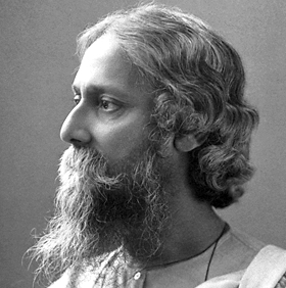
Rabindranath Tagore was born in Calcutta, India, on May 7, 1861, to Debendranath Tagore, a notable philosopher. Despite disliking traditional schooling, Tagore, educated by tutors, wrote extensively during his childhood. He briefly studied law and English literature in England in 1877 but returned to India due to dissatisfaction with Western education.


Tagore, a versatile artist, wrote poetry, novels, plays, and more. His famous work, "Gitanjali: Song Offerings" (1912), earned him the Nobel Prize in Literature in 1913, making him the first non-European and lyricist to win. He often wrote in Bengali first, translating his works to English. Notable Bengali publications include "Sonar Tari" (1894) and "Manasi" (1890).


Tagore pioneered the Bengali short story and published in both Bengali and English. Notable collections include "The Hungry Stones and Other Stories" (1916) and "The Glimpses of Bengal Life" (1913). His short stories drew inspiration from his years managing family estates in Shilaidah and Shazadpur, reflecting his compassion and belief in universal education.


Living on a houseboat on the Padma River during the 1890s, Tagore's interactions with villagers influenced his work and activism. His writings conveyed his views on Indian independence, the caste system, education, and other socio political issues.


Introduction of the Novel : 

  ‘The Home and The World is set against the backdrop of the Swadeshi Movement, a pivotal period in India's fight against British colonial rule. The novel unfolds in the early 20th century, primarily in the estate of the aristocratic landlord Nikhil, his wife Bimala, and Sandip, a charismatic and nationalistic friend.


         As the Swadeshi Movement gains momentum, the characters find themselves entangled in a web of conflicting ideologies, personal desires, and societal expectations.


    The narrative primarily revolves around Bimala, whose experiences and emotions serve as a lens through which the reader explores the broader socio-political landscape. The novel employs a multi-layered narrative structure, shifting perspectives among the three central characters of Nikhil, Bimala, and Sandip. Tagore's narrative technique involves a skillful interplay of first-person narratives, letters, and introspective passages, allowing readers to witness the story from multiple angles.


         The story begins with Bimala describing her relationship with Nikhil. She practically worships Nikhil, but she despises her sister-in-law, who often teases and insults her. Nikhil turns a blind eye to his sister’s treatment of Bimala. Rather, Nikhil wishes Bimala would see herself and him as equals and leave the home together occasionally. 

          Nikhil is loosely involved in the Swadeshi movement, often funding various projects to help the local economy. In addition, he funds Sandip Babu, an Indian nationalist speaker whom Bimala suspects of taking advantage of her husband.


            Bimala and Nikhil see Sandip speak, and she is deeply moved by his charisma. Sandip stays with Bimala and Nikhil, and during dinner, he and Nikhil argue about the extent to which nationalism will help India. Bimala, in an unusual display of autonomy, sides with Sandip and disagrees with her husband, believing that movements must sometimes be informed by passions rather than temperance. 


       Sandip compliments Bimala throughout the night and believes that she is the embodiment of India. After another argument with a similar outcome, Nikhil feels that he is becoming inadequate for his wife. Nikhil’s former school master and friend, Chandranath, arrives and encourages Nikhil to send Sandip away, but Sandip decides that Nikhil’s estate is the perfect place to do his business. Furthermore, he wants Bimala to be his Shakti, a woman to represent the Indian people.


Narrative Technique in the Home and the World : 


   The Home and the World comprises twelve chapters. Some chapters contain more than one self-narration. The total number of such narratives is twenty-three. Bimala is found to speak on ten occasions, while Nikhil and Sandip speak eight times and five times respectively. Of course, the opening and concluding narratives come from Bimala. Although set against the momentous freedom movement in India in 1905.


             The Home and the World is a psychology oriented novel. The basic advantage of the first person narrative is well exploited by the novelist in this respect. Each narrative well reveals the nature of the speaker concerned as also her or his attitude or angle of vision. The  events and situations, constituting the action or theme of the novel, are related in such narratives, but the most engrossing element of human psychology is well brought out particularly in these. It is not immaterial to mention here that in each first person narrative, the thematic situation is found less woven, while the speaker's mood of mind and personality are more expanded. 


      In fact, out of the thin texture of fictional setting and story, this has made a deep probe into the inner world and lightened the dark corridor of the individual mind. This has brought The Home and the World close not merely to the psychological but also to the stream of consciousness technique in novel writing.


 The novel employs various storytelling techniques, including the epic, epistolary, autobiographical, and first-person narrative. The first person narrative involves different characters sharing their experiences, feelings, and perspectives in their own words. Unlike autobiographical novels where a single speaker recounts the story, the first person narrative features multiple characters speaking.  In  the first person, offering diverse viewpoints on the same events. While this approach may lead to some repetition, it adds depth by exploring varied psychological aspects of the narrative. 


     Rabindranath Tagore's ‘ The Home and the World’ exemplifies this technique, as the story unfolds through the individual self-narrations of its three main characters Bimala, Nikhil, and Sandip each providing a unique angle of vision. 


     The speaker is single, mostly the novelist, who is also the hero of the story. He is the sole observer, scrutiniser and story-teller, and everything is viewed and presented from his particular view-point. He also speaks in the first person, but he is the only person to speak. But, in the first person narrative, the speaker is not one. Different characters speak, no doubt in the first person, but with difference in approach and assessment. 


     This is autobiographical revelations, quite unlike what is in the autobiographical novel, vary and show the varied aspects of the same matter. Of course, repetitions are not unlikely in, rather natural to, such a first person narrative. Bimala's opening story, no doubt, sets the entire background of her life, her conjugal happiness with Nikhil. Psychological twist is not much here and she speaks out as a simple happy wife of a highly aristocratic and wealthy family. This also bears out her great regard for her husband and fidelity to the rigidity of the family of her father in law.


Conclusion : 


   To sum up, the narrative technique of Tagor’s Novel goes beyond storytelling, creating a compelling exploration of identity, love, and nationalism. Through a blend of first-person narratives, letters, symbolism, and folk elements, Tagore's novel transcends its historical setting, offering timeless insights into the human condition. The transformative power of narrative technique is evident as readers navigate intricate relationships and ideologies, making the novel a profound examination of universal themes that transcend time and borders. 


      ‘The Home and The World’ stands as a testament to Tagore's literary prowess, using narrative technique to explore the profound depths of the human experience.


   Thank You… .   


Images : 2

words : 1258  


Hi Papa : Movie Review

      Hi Nanna - Movie Review  जान से भी में तुझको हूं प्यारी... कहता फिरता है की में हूं प्यारी... में हुं आँखें तेर...